My Husband Said, ‘Moms Don’t Get Sick Days’ After I Broke My Arm — So I Taught Him a Lesson He’ll Never ForgetHistory

My Husband Said, ‘Moms Don’t Get Sick Days’ After I Broke My Arm — So I Taught Him a Lesson He’ll Never Forget

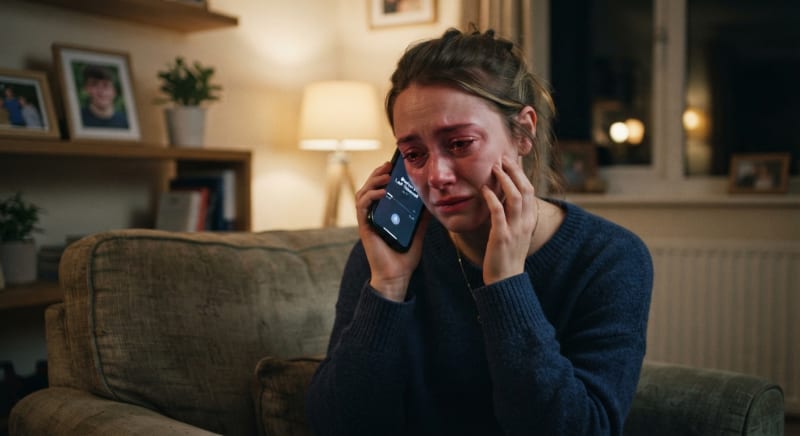
I Broke My Arm and Asked My Husband to Help With Our 5-Month-Old Twins. He Refused, Saying, “Moms Don’t Get Sick Days” — So I Taught Him a Lesson He’ll Never Forget. A couple of days ago, I fell down the stairs at home and broke my arm. The doctor put it in a cast and told me not to lift anything heavy for the next few weeks so my arm could heal properly. Normally, that would have been difficult enough. But I have 5-month-old twins. Two tiny boys who need to be fed, changed, carried, rocked, bathed, and watched almost every minute of the day. And suddenly, I had only one working arm. So I asked my husband, Derek, if he could at least take a day off once in a while, come home an hour earlier from work, or work from home occasionally so he could help me with the babies. I wasn't asking him to do everything. I just needed some help. Derek rolled his eyes. “I have a job,” he said. “I'm not going to sit around with the kids.” I tried to stay calm. “But Derek... my arm is broken. I'm wearing a cast. How am I supposed to handle two babies with one arm? I'm just asking you to help me a little.” He shrugged. “Well, sweetheart, you're the one who wanted kids. So you take care of them.” I stared at him. Then he said something I'll never forget. “Moms don't get sick days. They don't get days off. That's not my problem.” I nearly collapsed onto the couch. Not because of the pain in my arm. Because I couldn't believe the man standing in front of me had actually said those words. I take care of our sons almost entirely on my own. I get up with them at night. I feed them. I change their diapers. I rock them to sleep. I take them for walks. I take them to the doctor. I clean the house. I cook. I do the laundry. And somehow, I was expected to keep doing all of it with one arm in a cast. The worst part was that Derek had wanted children just as much as I did. We had planned the pregnancy together. We had talked about becoming parents. We had been excited when we found out we were having twins. So hearing him say, “You wanted kids,” as if I had somehow chosen to become a single parent was devastating. Over the next few days, I became completely exhausted. Eventually, I called my mom and asked her to come over and help me with the babies. She did everything she could, but she couldn't always be there. Then one day, she couldn't come. The babies needed a bath, and with my arm in a cast, there was no way I could safely bathe both of them by myself. So I asked Derek again. “Could you please help me bathe the babies tonight?” He had just come home from work. He crossed his arms and sighed. “I just got home. I'm tired.” I looked at him. “So am I.” He ignored that. “Why should I have to come home from work and take care of the kids too? You stay home all day and do nothing.” For a second, I couldn't even speak. Do nothing? I looked around our house. At the bottles on the counter. The baby clothes waiting to be folded. The toys scattered across the floor. The laundry. The dishes. The two babies who needed me constantly. I looked at my cast. And I realized something. Derek genuinely believed I did nothing all day. That was the moment something inside me broke. Not my arm. Something else. I was done begging. I was done explaining. And I was done trying to convince my own husband that raising our children was real work. It was time for Derek to learn his lesson. The next evening, when Derek came home from work, he walked through the front door expecting the usual chaos. But instead, he went pale as a ghost. “Oh yes,” I thought. This was only the beginning. He looked around. “Where are the kids?” I pointed toward the living room. “With your mother.” He blinked. “With my mother?” “Yes.” “Why?” I took a deep breath. “Because you said the kids were my problem.” He stared at me in disbelief. “What is that supposed to mean?” “It means exactly what you said.” I had spent the entire night thinking about his words. “Moms don't get sick days.” I thought about all the nights I'd gotten up alone with two crying babies. All the meals I'd prepared with one baby in my arms and the other beside me. The endless diapers. The doctor's appointments. The laundry. The cleaning. The sleepless nights. And the moment I'd fallen down the stairs with a broken arm and still thought about my babies before I thought about myself. While Derek apparently thought only about himself. “I told you I needed help,” I said calmly. “And you told me it wasn't your problem.” “You're overreacting!” he snapped. “No.” I shook my head. “I think I've just underestimated you for far too long.” He gave me a bitter laugh. “And what are you going to do now? Punish me?” “No,” I said. “I'm not punishing you.” I picked up my bag. “I'm just done rescuing you.” His expression changed. “What does that mean?” “Tonight, you're taking care of the babies.” He stared at me. “Alone.” “You're crazy.” “Maybe.” I walked toward the door. “But don't worry. Your mother is only ten minutes away. If you really can't handle it, you can call her.” “You can't just leave the kids with me!” I looked him straight in the eyes. “Why not? You're their father.” Silence. For the first time, Derek had no answer. I went into the bedroom, packed a few things, and came back out. He was still standing in the same place. “Where are you going?” “To my mother's.” “With your broken arm?” “Yes.” He looked at me as if he was only now beginning to understand what he had done. “You can't just leave.” I stopped at the door. “Yes, Derek.” I looked him directly in the eyes. “I can.” Then I added quietly: “And you know what the worst part is?” He said nothing. “I never wanted you to do everything for me.” My voice began to shake. “I just wanted you to understand that I'm just as tired, just as overwhelmed, and just as vulnerable as you are.” I wiped a tear from my cheek. “But you showed me that you don't see me as your partner.” I took a breath. “You see me as the person who takes care of everything.” Derek's face went pale. “That isn't true.” “Then prove it.” I opened the door. “Not with words.” I looked back at him. “With actions.” And then I left. For the first time since our twins were born, I walked out of that house without worrying about whether Derek could handle two babies. Because if he truly believed that taking care of them was so easy... ...it was time for him to find out for himself. The next morning, when I woke up at my mom's house, I had 17 missed calls. All from Derek. And then the messages started coming. “Where are the diapers?” “When do the babies eat?” “Why won't they stop crying?” “How do you normally get them to sleep?” I stared at the messages. Then another one came through. “I can't find the clean bottles.” And another. “Where are the extra clothes?” Then, after several minutes, one final message appeared. Five words. “I think you were right.” I stared at my phone for a long time. I didn't know whether to laugh or cry. Before I could answer, my phone started ringing. Derek. I picked up. “What?” There was silence on the other end. Then I heard his voice. But this time, he didn't sound angry. He sounded exhausted. “I... I can't do this.” I closed my eyes. “Yes, you can, Derek.” “No,” he whispered. “I had no idea it was this hard.” I said nothing. “You do this every day?” he asked. “Yes.” There was another long silence. Then I heard him take a deep breath. “And you did all of this with a broken arm?” “I didn't have a choice.” His voice cracked. “I'm sorry.” I wanted to believe him. I really did. But an apology doesn't suddenly fix everything. So I said: “Then start changing it.” “How?” “By finally being a father.” I paused. “Not just the man who brings home a paycheck.” There was silence on the other end. Then he said: “Okay.” I hung up. I still didn't know whether our marriage would survive. Maybe it would. Maybe it wouldn't. But I knew one thing for certain. I would never again allow anyone to make me feel like taking care of our children was solely my responsibility. I was their mother. But Derek was their father. And taking care of your own children isn't a favor. It isn't something you do only when you're not tired. And it certainly isn't something you get to dump entirely on your partner because you have a job. It's a shared responsibility. And sometimes, the only way to make someone understand that... ...is to stop doing their share for them.
1 month ago👁️ 1680
His Doctor Stopped Me and Said, ‘Your Husband Asked Me to Give You ThisHistory

His Doctor Stopped Me and Said, ‘Your Husband Asked Me to Give You This

“Mark gave me this three weeks ago,” the doctor said. “He was very specific. You weren’t supposed to see it while he was alive.” My heart began to race. “What is it?” The doctor stared at me for a few seconds before slowly bringing his hand out from behind his back. It was a small white envelope. My name was written on it. Not my full name. Just: **For my wife. If I’m no longer here.** My hands began to tremble. “He made me promise that I would give it to you only after everything was over,” the doctor said quietly. “And he wanted me to tell you something else.” “What?” The doctor swallowed. “Mark didn’t want you to think that he had given up during his final weeks.” I looked at him, confused. “I never thought that.” He lowered his eyes. “Then read the letter.” I took the envelope. But before I could open it, the doctor placed a hand on my arm. “There’s something else.” I looked at him. “What?” “Mark made sure that you and your daughter would be financially secure.” I frowned. “What do you mean?” The doctor shook his head. “You’ll have to ask him yourself.” I froze. “Ask him?” The doctor gave me a sad smile. “Not Mark. Someone who is still alive because of him.” I didn’t understand what he meant. Then he pointed toward the envelope. “Everything is in there.” I went home without opening it. I sat in the nursery that Mark and I had prepared together. The walls were still mostly empty. The tiny crib stood beside the window. On the dresser lay the little dress Mark had bought two months earlier. He had held it against his chest and said, “She’s going to look beautiful in this.” I placed a hand on my belly. Our daughter could arrive any day. And Mark would never meet her. At least, that was what I had thought. With trembling fingers, I opened the envelope. There wasn’t a long letter inside. Just one sheet of paper. I began to read. **My love,** **If you’re reading this, then I kept my promise. I’m gone, and I’m sorry I couldn’t tell you everything. I knew you would try to stop me.** I smiled through my tears. That was so like Mark. **You always said I tried to carry too much on my own. Maybe you were right. But this one time, I needed you to trust me.** **You know I wanted to donate my organs. What you don’t know is that my doctor told me about a particular patient who desperately needed a transplant. A father. He has two young children. Without the transplant, he probably wouldn’t have much time left.** I stopped reading for a moment. My vision blurred. **I decided that if I couldn’t be there to watch our daughter grow up, then maybe another father could have that chance with his children.** I pressed the letter against my chest. But then I read the next line. And my breath caught. **But that isn’t the most important part.** **Three weeks ago, the doctor told me something I could never bring myself to tell you.** **There is a way for our daughter to grow up without completely losing me.** I stopped breathing. My fingers went cold. I read the sentence again. Then again. **Not as her father. But as a part of another life.** Under the letter was another piece of paper. There was only an address on it. And beneath the address was a name. I didn’t recognize the name. But I recognized the address. It was the address of a house only a few streets away from ours. I stood up. I didn’t know why. Maybe it was hope. Maybe desperation. Maybe I simply needed to understand what Mark had been hiding from me during his final weeks. I put on my coat and drove there. When I arrived, I noticed a child’s bicycle beside the front door. Then another one. My heart began pounding. I rang the doorbell. After a few seconds, a woman opened the door. She looked about my age. Her eyes were red, as if she had been crying. She looked at me. Then she looked at the envelope in my hand. And suddenly, she began to cry. “You’re Mark’s wife,” she said. I couldn’t speak. The woman stepped aside. “Please, come in.” “How do you know my husband?” She wiped the tears from her face. “I don’t know Mark.” I frowned. “But he helped me.” “How?” She stared at me for a long moment. Then she said, “My husband died two years ago.” I felt as though the ground had disappeared beneath my feet. “His name was Daniel.” She took my hand. “And Mark made sure my children would still have a way to know their father.” I still didn’t understand. Then she led me into the living room. Hanging on the wall was a large photograph. It showed a man with two small children. Underneath it were the words: **Daniel — loved, missed, never forgotten.** Beside the photograph sat a small digital picture frame. The woman turned it on. A video began to play. I heard Mark’s voice. My knees nearly gave out. “If you’re seeing this, then you’re probably standing beside my wife.” The woman beside me began crying again. Mark continued. “And if my wife is standing there with you, then you’ll know I succeeded.” I stared at the screen. “I didn’t want to save just one life,” Mark said. “I wanted to leave something behind for two families.” The image changed. And what I saw broke my heart. Mark was sitting in our living room. Pale. Thin. But smiling. He was holding the little pink dress in his hands. “Our daughter will be here soon,” he said. He looked directly into the camera. “And if I’m not here anymore, I want her to know that her father didn’t leave because he wanted to.” He placed one hand over the little dress. “I left because I loved her.” Then came the final recording. Mark smiled. “And if you ever believe that you’re alone, look around.” He paused. “Because somewhere in this world, maybe a heart is still beating because I made you a promise.” The video ended. I stood there without moving. Then the woman placed her hand gently on my belly. “When is your daughter due?” she asked through her tears. “Very soon.” She smiled. “Then there’s something we need to tell her.” “What?” She looked at the dark screen. “That her father loved more people than we will ever know.” At that exact moment, I felt a strong kick inside my belly. I placed my hand over it. For the first time since Mark died, I didn’t cry. I smiled. Because suddenly, I understood his final wish. He hadn’t simply left me a goodbye. He had left me a reason to keep going. And somewhere, inside another person, a heart that once belonged to Mark might still be beating. Not as a replacement. Not as a memory. But as proof that some people leave love behind even after they’re gone.

1 month ago👁️ 2463
I Waited Four Hours for My Six Children on My 60th Birthday — Then a Police Officer Came to My DooHistory

I Waited Four Hours for My Six Children on My 60th Birthday — Then a Police Officer Came to My Doo

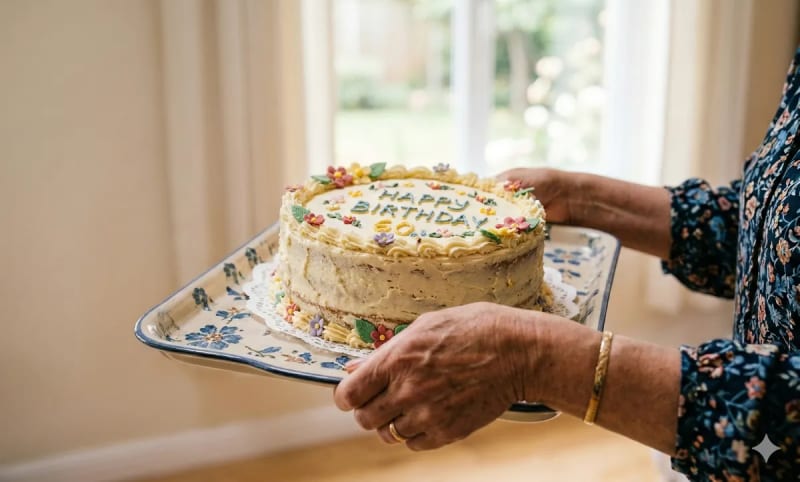
I thought turning sixty would mean a house full of familiar voices, a crowded table, and all six of my children laughing around me. Instead, I sat alone for four hours with seven place settings and a dinner that slowly went cold. Their father had once dreamed of a loud house and a table that was never empty, and together we had raised six children in ten years. But after he left us to start a new life overseas, the children became busy with their own lives. That evening, I kept checking the window, hoping to see headlights. I texted the family group chat, called each of them, and received nothing but silence. At nine o’clock, I finally cried into the napkin I had carefully ironed that morning. Then someone knocked on the door. A young police officer stood outside and asked, “Are you Linda?” He handed me a folded note written in my son Grant’s handwriting. It said, “Mom, don’t call anyone. Don’t ask questions. Just listen to him and get in the car.” My heart stopped. I asked whether Grant was alive, but the officer only told me that he would explain everything soon. He drove me to a community center, where I saw my other children’s cars parked outside. When the doors opened, I found balloons, a cake, decorations, and all my children waiting. The banner read, “HAPPY 60TH, MOM.” They had been preparing a surprise party and thought Grant was responsible for bringing me there.

1 month ago👁️ 47
They Laughed at My Daughter’s Birthmark—Then She Took the Microphone BackHistory

They Laughed at My Daughter’s Birthmark—Then She Took the Microphone Back

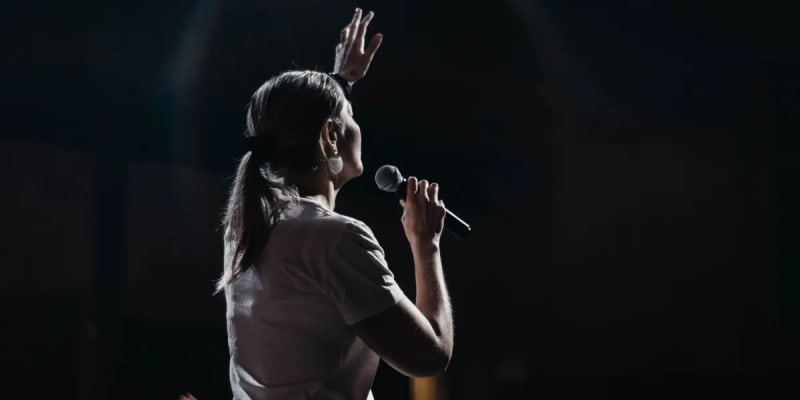
For years, I watched my daughter make herself smaller. Not because she wanted to. Because she had learned that being noticed came with a price. She was born with a large crimson birthmark covering much of the left side of her face. When she was little, she never thought twice about it. Then she started school. The staring began. Then the whispers. Then the questions. And eventually, the jokes. By the time she was a teenager, Eliza had learned exactly how to angle her face in photographs, how to let her hair fall over her cheek, and how to disappear whenever someone reached for a camera. I hated watching it happen. So I became her shield. I watched people. I listened for whispers. I questioned teachers. I stepped in before anyone could hurt her. At least, that's what I told myself. Then one night, my daughter asked me to do the hardest thing a mother can do. Trust her. --- The laughter started while Eliza was still standing beneath the spotlight. One second, she was singing. The next, a girl's voice carried across the auditorium. "Someone's feeling confident tonight." I knew that voice. Maddie. A few students laughed. Then more joined in. Eliza stopped singing. The music continued without her. Slowly, her hand moved toward her face. Toward the birthmark. I pushed myself out of my seat. I was already halfway into the aisle when Eliza looked directly at me. And suddenly, I remembered what she'd said two hours earlier. "Mom, don't come rescue me." --- That morning, I had almost broken one of Eliza's oldest rules. She was sitting at the kitchen table, laughing at something on her tablet. I reached for my phone. "Mom." I stopped. "You were about to take a picture." "I wasn't." She gave me a look. "You absolutely were." I lowered the phone. "You looked happy." "I can be happy without photographic evidence." I smiled. "One day, you'll wish I had more pictures of you." She didn't even look up. "One day, you might finally retire that sentence." I laughed. She had a point. Eliza was fifteen. Smart. Funny. Observant. And she'd spent years learning how cruel people could be. When she was born, the doctors had told us the crimson birthmark would always be there. As a toddler, Eliza didn't care. She'd run around the house with her hair tied back, completely unaware that anyone might think she looked different. School changed that. Kids asked if she'd been burned. They whispered behind her back. They stared. By middle school, she started wearing her dark hair across one side of her face. Eventually, she wouldn't let anyone post a photograph without seeing it first. I noticed everything. Every glance. Every laugh. Every whisper. And I reacted to almost all of it. One morning, Eliza caught me staring at her. "You're doing it again." "Doing what?" "Checking to see if I'm okay." "I'm your mother." "That doesn't mean you have to check every five minutes." I smiled. "Pretty sure it's in the contract." "Then maybe we should renegotiate the contract." I laughed. But underneath the joke was something I didn't want to hear. She was asking me to let go. --- That afternoon, I stopped by school to help prepare for the talent show. As I walked past the art room, I saw Eliza inside with her favorite teacher, Miss Cole. A self-portrait was sitting on a drying rack. I stopped. Eliza had painted herself with her hair completely pulled away from her face. Her birthmark was visible. All of it. I stared. Miss Cole noticed. "She painted it three times." "Why?" "The first two versions had her hair covering her cheek." I looked at Eliza. She turned around. "Are you two talking about me?" "Never," I said. Miss Cole smiled. "Your mother was just criticizing your technique." "I was admiring it." Eliza rolled her eyes. Then she said something that made my stomach tighten. "I'm wearing my hair like that tonight." I looked at her. "What's tonight?" She smiled nervously. "I'm singing in the talent show." I blinked. Eliza loved to sing. But she had never sung in front of an audience. Not at school. Not anywhere. "Are you sure?" She looked back at the painting. "I'm tired of hiding, Mom." I wanted to tell her that she didn't need to prove anything. But I knew she wasn't asking for permission. She was asking for support. "What do you need from me?" "Come tonight." "Of course." "And don't pace in the aisle." I laughed. "I'll try." "No. Promise." I looked at her. "I promise." She squeezed my hand. "Good." --- Two hours later, I discovered just how difficult that promise was going to be. Eliza stood backstage in a soft blue dress. Her hair was pinned away from her face. Her hands kept opening and closing nervously. "You okay?" "I'm considering whether disappearing through the ceiling is still an option." "Probably. But I imagine it would be expensive." She laughed. Then Maddie appeared. Two girls walked beside her. Maddie's eyes immediately went to Eliza's uncovered cheek. "Wow." Eliza stiffened. Maddie smiled. "You're actually showing it tonight." Her friends laughed. My body moved before my brain did. Maddie continued walking. "Give it ten minutes. She'll cover it again." I took another step. Eliza grabbed my wrist. "Mom." "You heard her." "Yes." "Then let me handle it." "No." I looked at her. "I'm not going to stand here while she talks about you like that." "And I'm not going onstage after watching my mother argue with another teenager." "I'm trying to protect you." "I know." "Then why are you stopping me?" Eliza looked at me. "Because tonight isn't about Maddie." I went quiet. She continued. "I've spent years letting people like her decide what I wear, how I stand, whether I get into pictures, and how much of my face people are allowed to see." She released my hand. "I don't want her deciding what happens tonight too." I swallowed. She softened. "I know why you do this." "Do what?" "You scan every room like somebody is about to hurt me." I looked away. "Sometimes I need you to trust me before you protect me." That sentence stayed with me. "What exactly are you asking me to do?" "Sit out there." "And?" "Be proud of me." I nodded. "I can do that." "And if Maddie says something?" I hesitated. Eliza raised an eyebrow. "Mom." "I'll stay calm." "Promise." I took a breath. "I promise." --- When the curtains opened, Eliza walked onto the stage. The spotlight found her. For the first time, she wasn't hiding behind her hair. She took the microphone in both hands. The music started. Her first line came out shaky. Then the second was stronger. By the chorus, her shoulders had relaxed. Her voice filled the room. I barely recognized the nervous girl who had been backstage minutes earlier. This was the Eliza I knew at home. The girl who sang while cooking. The girl who turned the shower into a concert hall. The girl who had always had a voice. She had simply been afraid to let other people hear it. Then Maddie's voice cut through the auditorium. "Someone's feeling confident tonight." A few students laughed. Eliza stopped. Her hand moved toward her cheek. I stood. Miss Cole caught my arm. "Wait." "I promised her I'd trust her." "I know." "I didn't promise to sit here while they humiliate her." Miss Cole looked toward the stage. "Look at Eliza." "I am." "No. Look at who she's looking at." I followed her gaze. Eliza wasn't looking at Maddie. She was looking directly at me. And I remembered. Sometimes I need you to trust me before you protect me. Slowly, I sat back down. Then Elliot stood. He was one of the student hosts. He walked onto the stage and picked up the spare microphone. "Maddie?" She looked confused. "What?" "Say it again." Her smile disappeared. "Say what?" "The joke." She laughed nervously. "I was kidding." "Then explain it." The auditorium went silent. Maddie looked around. Her friends suddenly found the floor fascinating. "What was funny?" Elliot asked. "I said forget it." He nodded. Then he turned toward Eliza. "You're not finished." And he stepped away. He didn't take over. He didn't speak for her. He simply gave the moment back. Eliza stood there for a few seconds. Then she lowered her hand. She tucked her hair behind her ear. And looked toward Maddie. "Actually, Maddie?" Maddie looked up. "You're right about one thing." The room was silent. "I am feeling confident tonight." Then Eliza turned toward the sound booth. "Can we start again?" Someone called back. "From where you stopped?" She shook her head. "From the beginning." The music started again. Her first note trembled. The second didn't. By the chorus, she was stronger than before. She sang every word. And when she reached the final note, the entire room seemed to hold its breath. Then the applause began. People stood. Students clapped. Parents rose from their seats. Elliot applauded from the side of the stage. And Eliza looked at me. She saw the tears running down my face. She rolled her eyes. I laughed. --- Eliza didn't win the talent show. A boy who played piano took first place. And he deserved it. But winning wasn't what mattered that night. After the performance, the principal spoke to Maddie. There was no public humiliation. No dramatic speech. Just consequences. Later, Eliza and I sat in the principal's office. He looked at her. "Has Maddie treated you this way before tonight?" Eliza nodded. "For how long?" "Since middle school." My stomach dropped. She told him about the comments. The photographs. The jokes. The way Maddie would zoom in on her face and laugh with other students. The things she'd say whenever teachers weren't close enough to hear. I sat there listening. And I realized how much my daughter had been carrying alone. The principal promised to address the situation. He told Eliza exactly who she could go to if it happened again. Then he looked at me. I had a hundred things I wanted to say. Instead, I looked at my daughter. "I don't need Maddie humiliated." I paused. "I need my daughter to be able to walk into this school without planning how to hide her face." The principal nodded. "She will." --- Outside the school, I looked at Eliza. "I wanted you to win." "I know." I opened the car door. "Come on." "Where are we going?" "Ice cream." She smiled. "Now?" "Especially now." Twenty minutes later, we were sitting in a booth with two melting sundaes between us. Eliza pushed her spoon through the whipped cream. "Mom?" "Yeah?" "Before I went onstage, I thought everyone would stare at my face." My chest tightened. "Some people did." "I know." She looked down at her ice cream. "But I stayed." I reached across the table and took her hand. "I'm proud of you." "For singing?" "No." I squeezed her fingers. "For going back to the beginning." She smiled. --- The next afternoon, I was folding laundry when Eliza walked into the kitchen. "Did you take that picture yesterday morning?" "No." She nodded. "I told you not to." Then she tucked her hair behind her ear. "Take one now." I froze. "Seriously?" She smiled. No hiding. No angle. No request to crop one side of her face. She simply stood there. Exactly as she was. I took the picture. "Eliza?" She turned. "Can I keep this one?" She looked at the screen. Then smiled. "Obviously." She walked away. I looked at the photograph again. For years, I had believed protecting my daughter meant getting between her and every cruel thing in the world. I thought being a good mother meant reaching the hurt before it reached her. That night taught me something different. Elliot stopped the laughter. The principal handled the consequences. I made sure the adults listened. But the most important part belonged to Eliza. She took the microphone back. She chose to begin again. And the next day, she let me take a picture without hiding a single part of herself. Maybe protecting someone doesn't always mean standing in front of them. Sometimes it means standing behind them. Sometimes it means letting them walk into the spotlight alone. And trusting that when the world tries to make them smaller, they will know how to take their space back. My daughter didn't just finish a song that night. She stopped hiding. And for the first time in years, she didn't ask me to protect her face from the world. She asked me to remember it. Exactly as it was.

1 month ago👁️ 102