My marriage to Ryan ended after eleven years, and like most divorces, there was a long list of small things to settle before everything felt truly finished. One of them was the spare house key to the home we used to share — the house that ultimately became his after we split our assets.
"I need that spare key back," he texted, no further explanation. I dropped it off that same evening, placing it in his hand on the porch of the house I'd lived in for a decade, without much conversation between us. He said a brief thank you, and I drove home with the same hollow feeling I'd grown used to throughout the divorce process.
Three years passed. We barely spoke anymore, except for occasional logistics that had long since been settled. Then one day, his sister called to tell me Ryan had been hospitalized with a serious cardiac complication, and there was no one available to check on his house while he recovered. For reasons I couldn't fully explain, I felt compelled to help, even though we hadn't officially been anything to each other for years.
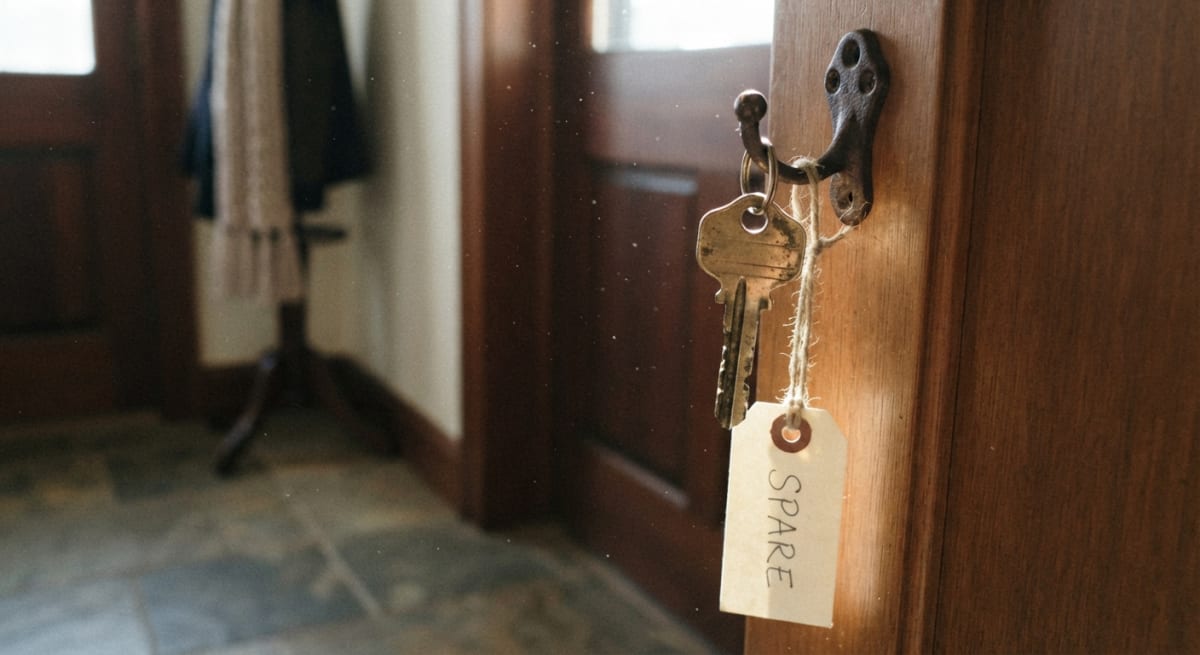
I went to the house to grab a few things he'd asked for at the hospital. As I opened the door, my eyes landed on the small key hook by the entrance — and there, hanging neatly, was the spare key I had returned to him.
I paused, staring at it. The lock hadn't changed. The key had never been thrown away, never melted down, just hung there for three years, as if waiting for something he'd never said out loud.
When I mentioned it to him at the hospital, he was quiet for a long moment before answering. "I never changed the lock," he said softly, eyes drifting to the window. "Not because I hoped we'd go back to how things were. But because I always hoped that someday you'd come knock on that door yourself — not call first to ask if you were allowed to."
I didn't know what to feel hearing that. Not regret, and not hope for reconciliation either. Just an honest admission that behind his cold exterior, there had always been a part of him still holding space for me — not as a wife, but as someone who had once mattered deeply in his life.
What this taught me
Small actions that seem meaningless — not changing a lock, or keeping something for no clear reason — sometimes carry meaning that's never spoken aloud. Before assuming someone has fully "moved on," pay attention to the small things they've quietly held onto. Sometimes that's the language they choose because words feel too heavy to say.