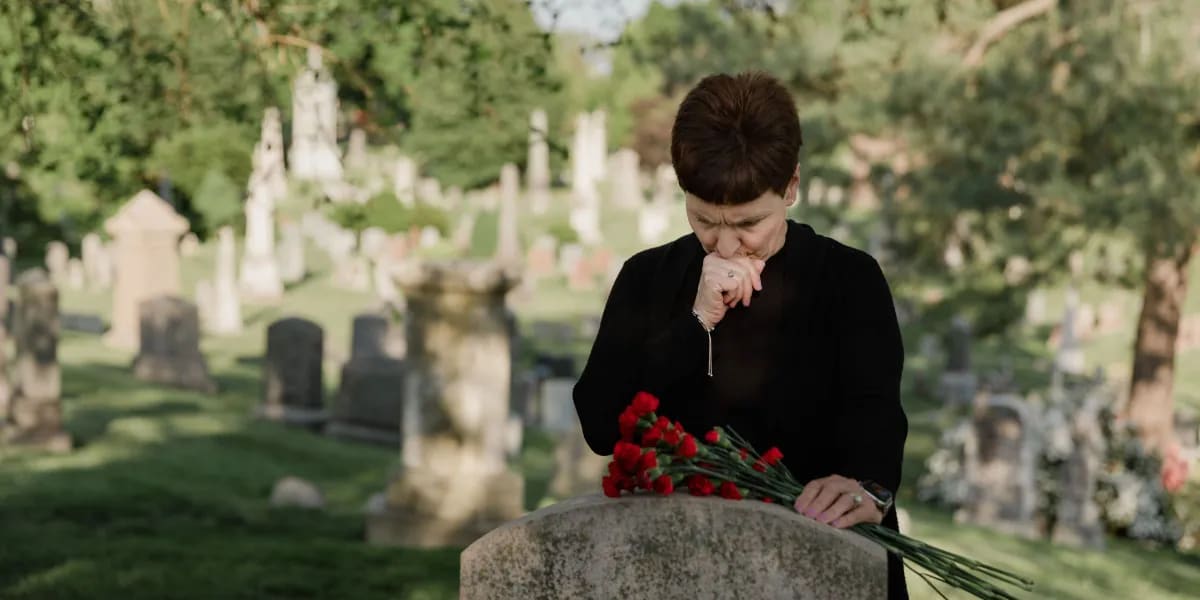
I thought I knew everything about my daughter, but after her death, I discovered she'd kept an extraordinary secret. I never imagined her final wish would force me to confront a painful chapter of my past.
The elderly man gripped the doorframe as though his legs had suddenly given way.
"So she kept her promise... even from you," he whispered.
He quickly closed the wooden box.
"Your daughter was a remarkable woman, Angelica."
"How do you know my name?"
"Emma told me about you."
Instead of answering, he asked something that made my heart pound.
"Angelica, do you remember the yellow bicycle you had when you were six?"
Nobody had mentioned that bike in over 50 years!
I'm 63, and until that afternoon, I thought losing my daughter was the worst thing I'd ever have to face.
Emma was 30 when the doctors told us there was nothing more they could do.
She'd been sick for almost two years.
I sold the gold jewelry my mother had left me, then sold my car and used every dollar I'd saved for her treatment.
Specialists, medications, procedures. I paid for anything that gave us even the smallest hope.
Some nights, I sat beside her bed and cried until I could barely breathe.
"God, I thought she'd have a husband, a family, a whole life ahead of her," I whispered. "Why are You taking my daughter from me so soon?"
Her father, Anthony, died when she was 11. After that, we only had each other.
Even during her illness, Emma worried about me.
"Mom, who's going to make sure you eat properly when I'm gone?"
"Stop talking like that," I'd tell her.
During my daughter's final weeks, I barely left her side.
Then, late one night, she opened her eyes and whispered, "Mom, I need you to do something for me."
She pointed toward the bottom drawer beside her bed.
Inside was a small wooden box wrapped in an old scarf.
"There's an address under it," Emma said. "Please take this there after I'm gone."
The name meant nothing to me.
"Just promise me you'll give it to him. Don't open it."
I wanted to ask a hundred questions, but she looked so tired that I simply nodded.
"Please listen to whatever he tells you."
Emma died the next morning.
For nearly a week, I couldn't bring myself to touch the box.
Then I borrowed my neighbor Robin's car and drove to the address.
An elderly man opened the door, and I told him my daughter's name.
His face changed instantly.
His hands trembled as he opened it.
The second he saw what was inside, all the color drained from his face.
Then he whispered those strange words.
And minutes later, he asked about a bicycle from my childhood.
"How do you know about my bike?" I demanded.
Arthur gestured for me to enter before lowering himself into an armchair.
"Sir, I buried my daughter six days ago. I came here because I promised her I would. Please stop making this harder."
"You're right. I'm sorry."
He gestured toward the mantelpiece.
"Perhaps you should look at that photo."
A framed picture showed my Emma sitting beside Arthur in a garden.
She looked healthy, with long hair and a bright smile.
"You've known my daughter that long?!"
Emma and I had been close. We'd shared meals, talked every evening, and spent weekends together.
How had she kept this hidden?
"Was she happy when she visited you?" I asked.
"Then why didn't she tell me?"
Arthur looked toward the box.
"Because she was trying to protect someone."
He didn't answer immediately.
Instead, he asked, "What do you remember about your father?"
The question caught me off guard.
"He left when I was seven. My mother said he didn't want a family anymore."
"And you never saw him again?"
"Sometimes, children aren't told everything."
"What are you getting at? My mother raised me alone. She worked very hard to make sure I had enough. I won't have a stranger questioning her!"
"I'm not questioning whether she loved you."
"Then what are you doing?"
"Showing you something Emma wanted you to see."
Arthur walked to a cabinet and returned with an old photo album.
He placed it on the table.
The first image showed a little girl standing beside a yellow bicycle.
She wore white shoes and had a gap between her front teeth.
I picked up the album with shaky hands.
"Where... where did you get this?"
There I was again, sitting on a man's shoulders at a summer fair!
The man's face was partly hidden by my arms.
But I remembered the day.
I'd begged my father to carry me because my feet hurt.
"Who are you?" I whispered.
The stranger looked at me.
"Do you remember what your father called you?"
He smiled through his tears.
For a moment, I couldn't breathe!
The eyes. The nose. The small scar beneath his chin.
Then I remembered a younger man kneeling beside my bike, promising not to let go until I could ride alone.
"My first name is Arthur, and my middle name is Thomas. Your mother called me Tom."
That explained why I hadn't recognized the name on Emma's paper.
I'd grown up knowing him as Tom.
And the man before me looked nothing like the 34-year-old I'd last seen almost six decades earlier.
"But Mom told me you died," I whispered.
"I didn't know she'd told you that."
"She said someone told her years after you left."
"Why didn't you come back?"
"Your mother and I were unhappy together. Eventually, we separated."
"I left the marriage, Angel. But I wanted to remain your father."
He opened the album to a section filled with letters.
"I hope you're enjoying school. I saw a yellow ribbon today and remembered how you tied one around your bicycle basket."
There were birthday cards and Christmas letters.
Some envelopes had been returned unopened.
Others were copies he'd kept.
"I never received these."
He explained that my mother had moved us twice after the separation.
When he found our new address and visited, she told him I didn't want to see him.
Later, he heard she'd remarried.
"She never remarried," I whispered.
"Then I was given the wrong information."