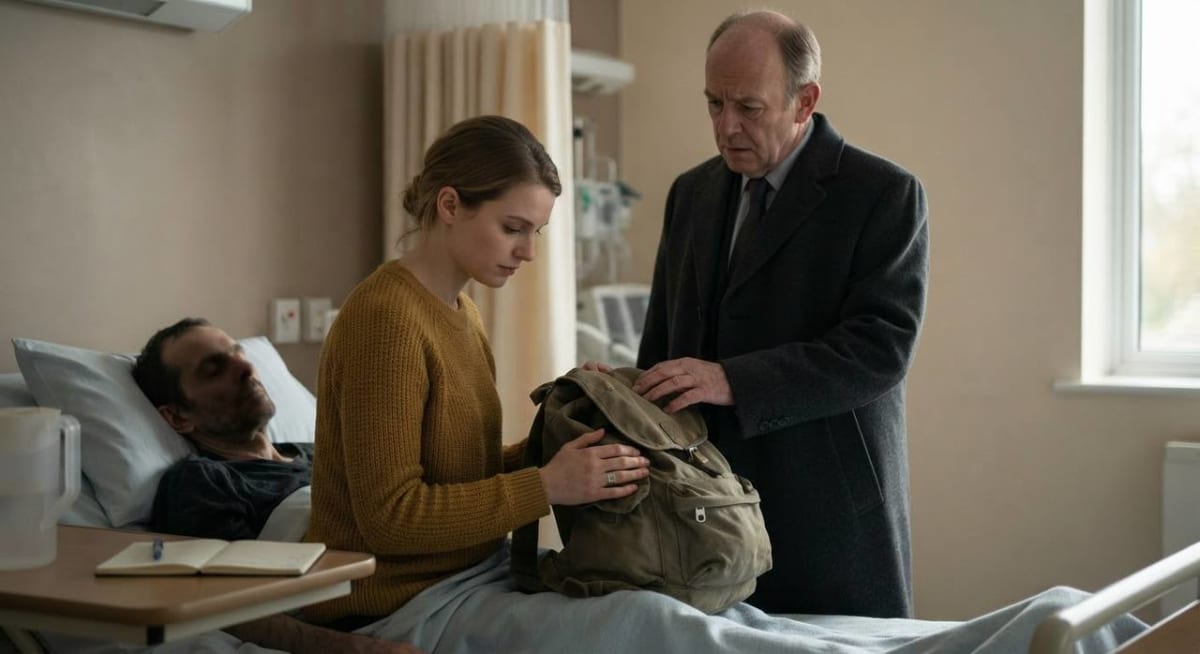
I had been married to Thomas for exactly seven days when he passed away in his hospital room, leaving me with a soda-can pull tab on my ring finger and an agonizingly heavy heart. I was twenty-nine, while Thomas was seventy-two and terminally ill. We had met while I was volunteering at the hospital, both of us bound by quiet, unexpressed grief. When he asked me to marry him so he wouldn't die alone as a nameless file, my heart answered before my mind could stop me. But less than an hour after his passing, his lawyer handed me Thomas’s worn green backpack with a cryptic warning: "Thomas wasn't who you thought he was."
Heartbroken and confused, I unzipped the bag expecting to find legal papers or hidden money. Instead, I found dozens of cream-colored envelopes marked with ordinary locations like Bus Stop, Laundromat, and Grocery Store. Inside were random tokens—an old train ticket, a soup receipt, a napkin with a crossed-out number—each paired with a short note about a stranger's quiet moment. Then I opened one labeled Waiting Room and found a hospital visitor sticker from a year ago with the note: "She said her mother laughed like she was trying not to." My blood ran cold; those were the exact words I had spoken to Thomas the very first day we met.
A battered notebook at the bottom of the bag revealed the full story. Thomas hadn't just been a lonely patient; he had spent decades secretly observing broken people in public spaces, recording the exact moment someone chose to keep living. When I confronted his attorney, he slid over a newspaper clipping revealing Thomas was actually a renowned grief counselor who had retired after forty years of service. He believed people healed better when they didn't feel like they were being treated. Thomas hadn't married me out of pity or desperation—he had recognized a grieving young woman who was hiding from the world, and he wanted to guide me back to it.
His final envelope, marked "After Tuesday...", contained a simple list of mundane tasks: feed the ducks, buy peaches, order vanilla ice cream. Following his instructions a few days later, I found myself standing in a crowded park, eating ice cream and laughing out loud for the first time since losing my mother. Thomas didn't leave me money or grand promises, but he left me something far more valuable: the realization that the greatest kindness isn't fixing someone's pain, but making sure they never have to carry it entirely alone.