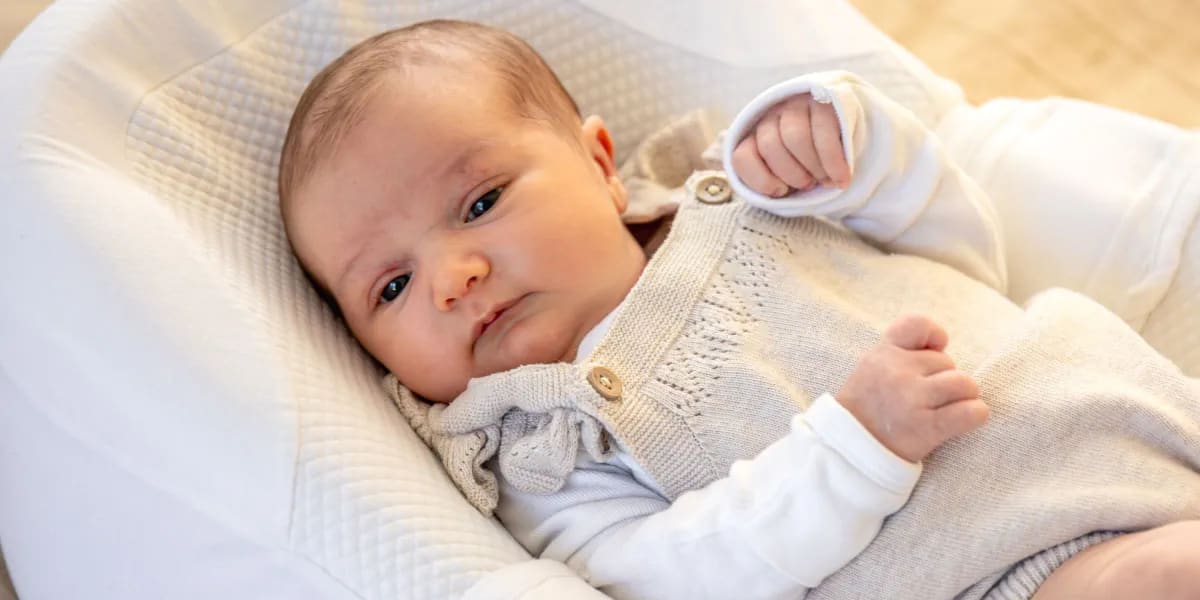
It was supposed to be the happiest day of my brother's life. Instead, it ended with a scream that echoed through the entire hospital floor.
A Wish That Would Change All of Us
My twin brother Ryan and his wife Melissa had spent years trying to have a baby. One miscarriage after another, endless doctor's appointments, quiet tears at the kitchen table — I had watched it all. So when they finally asked if I would be their surrogate, I didn't have to think twice.
Ryan wasn't just my brother. He was my best friend, for as long as I could remember. He had carried me through every crisis in my life, and whenever I saw how happy he was playing with my own son, how badly he longed for that exact feeling himself, I knew: this was something I could do for him.
The fertilization at the fertility clinic went smoothly. A few weeks later, I was holding a positive pregnancy test in my hands — and I will never forget Melissa's tears of joy.
Nine Months of Anticipation
When the ultrasound revealed it was a girl, the excitement knew no bounds. Melissa and Ryan bought tiny dresses, music boxes, a crib in pale wood. The nursery was painted a soft pink, with a hand-painted name on the wall — the name they had chosen.
Throughout the pregnancy, I felt a strange sense of calm. I knew this wasn't my child — and yet I already loved her, because I knew exactly where she was going: into the arms of two people who wanted nothing more in the world.
The Birth
When labor began, Melissa was the first person I called. She and Ryan were at the hospital within the hour. The delivery itself went smoothly, and when the midwife wrapped the crying bundle in a towel, the room filled with a happiness I can barely put into words.
Melissa held her daughter first. She cried, laughed, whispered things to her that only a mother says to a newborn.
Then she handed the baby to Ryan.
I watched my brother study that tiny face — that look new parents get, as if they're discovering the whole world for the first time.
Then the midwife gently turned the baby to the side, to settle her more comfortably in Ryan's arms.
And his expression changed completely.
"I Can't Take Her"
Ryan stared at his daughter's back. Seconds passed. No one said a word. Then he went pale.
"Ryan, what's wrong?" I asked.
His voice trembled as he said, "I'm sorry, but... I can't take her."
I thought I'd misheard him. "Ryan, she's your daughter. What are you talking about?"
He looked at Melissa. Then at me. And repeated, louder this time: "I'm not taking her home!"
He placed the baby back into my arms, as if she were burning his hands.
Melissa, tears in her eyes, demanded an explanation. Why couldn't they take their own daughter home?
Ryan exhaled, his face red with tension. "Look at her back. This can't be. She can't be our daughter."
The Look That Changed Everything
I looked at the baby's back — and everything went black for a moment.
There, running along her tiny spine, was a faint, irregular patch of lighter pigmentation — in exactly the shape and place as the birthmark that Ryan and I both carry on our own backs. A birthmark that, according to our mother, had been passed down through three generations in our family — exclusively through blood, never through a donor egg.
Melissa screamed so loudly that nurses came running from the entire floor.
That same day, we demanded an investigation from the clinic's management. What they told us hours later left Melissa collapsing in shock: a mix-up had occurred in the lab during the IVF procedure. It wasn't Melissa's egg that had been used — it was mine, mislabeled weeks earlier after being retrieved for a completely different patient.
I hadn't just been the surrogate. I was the biological mother of the child I had just given birth to. And Ryan wasn't his daughter's father — he was her uncle.
What Happened Next
The weeks that followed were the hardest of our lives. A lawyer, an internal investigation by the clinic, endless conversations about what "family" even means when biology and love suddenly stop saying the same thing.
In the end, Melissa and Ryan made a decision I never expected: they asked me to share custody with them, rather than cutting the little girl out of our lives. The nursery stayed pink. Her name stayed the same. Only the truth about where she came from would wait — to be told to her one day by all of us together, not as a scandal, but as what it truly was: a mistake that brought us closer than we ever thought possible.
Today, a year later, my daughter calls me "Auntie" and Melissa "Mom." And when Ryan lifts her into his arms, I no longer see fear in his eyes — only the same unconditional love he's felt for my son all these years.