That morning, I stuck candles shaped like a one and an eight into a stack of chocolate chip pancakes.
Then I pulled them out. Nolan was still asleep, and I was afraid the wax would start melting.
My husband laughed.
"You're more nervous than he is."
Our boy was turning eighteen.
He'd come to us at twelve. He stood in the hallway with his jacket zipped up, holding his belongings in a trash bag that was splitting at the seam.
That first evening, he asked if he could have an apple.
"Of course, sweetheart. You don't have to ask permission to eat here."
Over six years, he learned to open the refrigerator without asking. To leave his sneakers in the hallway. To shout from upstairs, "Mom, have you seen my hoodie?"
I couldn't even remember when I'd stopped pausing at the word "Mom."
It had become ordinary.
That morning, I heard something bumping down the stairs.
I thought he was dragging down another basket of laundry.
But Nolan appeared in the kitchen doorway wearing his jacket and sneakers.
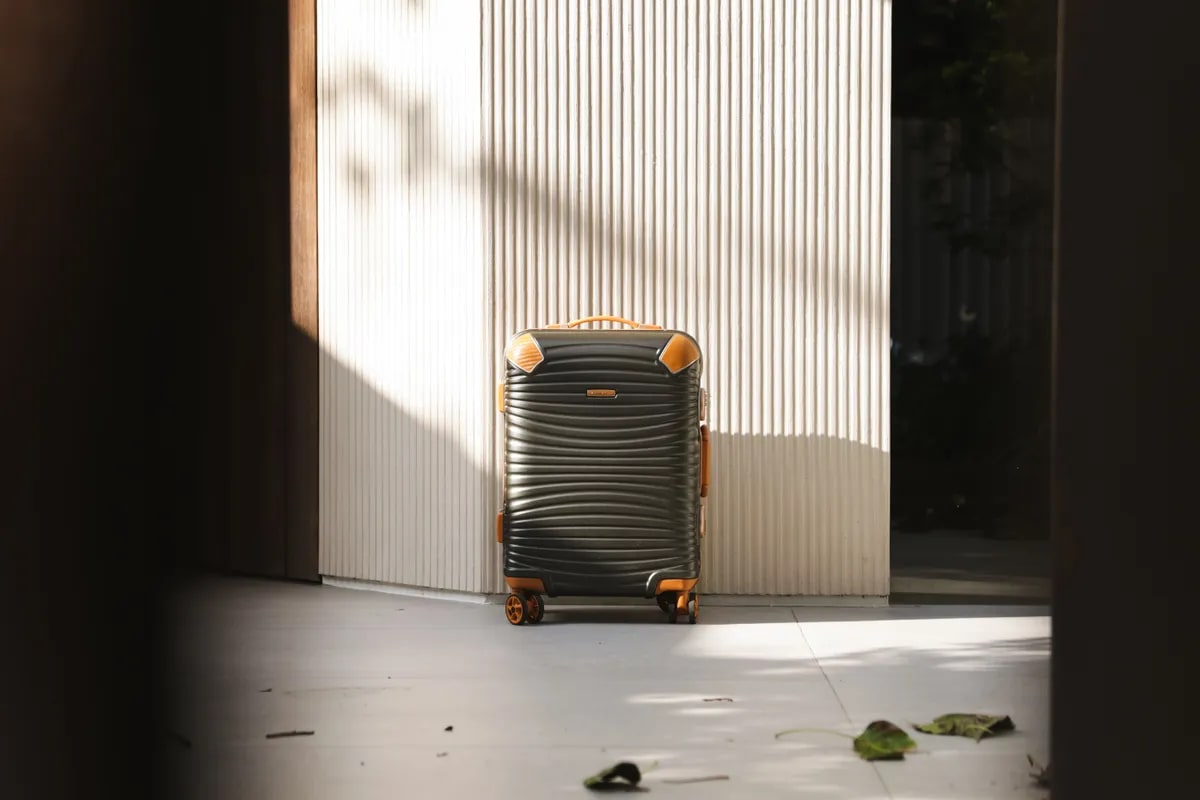
With a suitcase.
A backpack hung from his shoulder.
"Happy birthday!" I smiled. "Where are you off to?"
He glanced at the pancakes, then at the two candles beside my plate.
"I thought I'd be ready by now."
"Ready for what?"
He didn't answer. He took his key out of his pocket and set it on the table.
"I cleaned my room. The sheets are in the washer. I just wasn't sure which cycle to use."
My husband lowered his mug.
"Nolan, what's going on?"
I was still hoping this was some unexpected trip with friends.
Then he walked over and hugged me.
"Thank you, Mom. For all these years."
When he started to pull away, I caught his sleeve.
This was a goodbye.
"Wait. Where are you going?"
He swallowed.
"I'm not sure yet. The bus station first."
My hands went cold.
"Why?"
Instead of answering, he glanced toward the hallway.
"Could I take a towel? An old one. I left mine because you paid for it."
I pushed my plate aside.
"Your towel is yours. So is your room. Why are you talking like you have to give everything back?"
Nolan looked at my husband, then at me.
"I thought Dad told you about his condition."
"What condition?"
He tightened his grip on the suitcase handle.
"He whispered it in my ear the day you brought me home. I remembered every word."
My stomach dropped.
I looked at my husband. He was staring at his coffee like it might answer for him.
"David?"
He wouldn't meet my eyes.
"What did you tell him?" My voice came out very quiet.
Nolan sat down on the edge of a kitchen chair, still wearing his jacket.
"He said he was dying. That he had three years, maybe four."
The pancakes were getting cold.
I couldn't look at either of them.
"That was six years ago."
"I know," Nolan said. "I kept track of every year. Every doctor's appointment I overheard. Every time you thought I was asleep and I heard you crying in the hallway."
My husband finally looked up.
"Nolan—"
"You told me not to get attached," Nolan continued. "You said it would hurt less if I remembered I was temporary. That this was charity. That you'd eventually have to let me go."
I stood up so fast my chair scraped against the tile.
"David, tell me he's lying."
"He's not."
The words just sat there.
"You told a twelve-year-old boy you were dying?"
"I was scared," my husband said. "I had just gotten the diagnosis. I wasn't thinking straight."
"And you never corrected it?" I could hear the rage in my own voice. "You let him live here for six years thinking you were going to die? Thinking this was temporary?"
Nolan spoke up quietly.
"He did tell me. About two years in. He said the doctors were wrong. That he got a better treatment. He said I was free to stop treating the family like a funeral."
I turned to look at my foster son.
"But you packed anyway."
"I didn't know if I could trust it," Nolan said. "I've been waiting to see if he'd get sick. I keep thinking it's still coming. That one day he'll get a phone call and suddenly the clock starts running again."
My husband stood up.
"I made a terrible mistake."
"You made several," I said flatly. "Starting with being cruel to a child in the middle of his worst day."
"I know."
"And then you let him suffer through years of uncertainty instead of actually fixing what you broke."
He didn't argue.
Nolan gripped the suitcase handle tighter.
"I thought today was my deadline. I turned eighteen. I'm an adult now. I figured if I was going to lose him, I'd do it on my terms."
I sat back down.
My legs felt weak.
"When did you know it wasn't true anymore?"
"I'm still not completely sure it's true," Nolan said. "Like, I believe you're in remission. But I don't know if I believe it'll last. And even if it does, I keep wondering what else you never told me. What other condition you're hiding."
My husband's face crumpled.
"There's nothing. I swear to you, there's nothing else."
"That's what you said six years ago," Nolan replied. "Just about the dying part."
I reached across the table and took my husband's hand.
Not in forgiveness. Just to get his attention.
"You need to tell him everything. And I mean everything. Every doctor's visit, every test result, every prognosis. He needs to see the paperwork."
"Okay," David said. "Okay."
Nolan watched us both.
"I don't know if I can stay," he said finally.
"I understand," I told him. "But you don't have to leave today."
"Why not?"
"Because it's your birthday. And because running away was his solution to fear, not yours."
I gestured to my husband.
"You've shown more maturity in this kitchen this morning than he has in six years. You deserve better than a reactive decision made on your birthday."
Nolan glanced at the cold pancakes.
Then at the candles.
"If I stay... I'm going to need a lot of honesty."
"You'll get it," I said. "Starting right now. David, go get the folder with his medical records."
My husband didn't move.
"Now," I said.
He left the room.
When it was just the two of us, I spoke quietly.
"I'm angry at him. But I'm not angry at you. You survived something terrible with him as your example of how to handle fear. That takes strength."
Nolan's eyes got shiny.
"I want to believe him."
"Then let him prove it to you."
David came back with a thick folder.
He opened it and walked Nolan through every page. The diagnosis. The initial prognosis. The treatment. The remission. The follow-up scans from last month that showed no recurrence.
Nolan read everything.
It took almost an hour.
When he finished, he set the folder down slowly.
"Why didn't you just tell me the good news?"
My husband looked devastated.
"Because I was still scared. Because I didn't know how to take it back. Because I'd already decided you were temporary, and it was easier to let that be true than to admit I was wrong."
Nolan closed his eyes.
"You should have treated me like a kid, not like your personal test subject for grief."
"I know."
"You should have protected me."
"I know."
"Instead you made me protect myself."
David didn't say anything.
I watched my foster son make a decision right there at the table.
He stood up and unzipped his jacket.
He hung it on the back of his chair.
Then he came around the table and hugged my husband.
It wasn't a full embrace. It was stiff and measured.
But it was a beginning.
"I'm going to need therapy," Nolan said into his shoulder.
"Yes," David agreed. "We'll find someone. Both of us will."
Nolan pulled back and looked at me.
"Can we have breakfast? The real one? I think the pancakes might be done."
I smiled and got up to make fresh ones.
This time, I made the candles stay in.
Over the next few weeks, Nolan didn't unpack his suitcase completely.
He left it in his room, visible, like a promise to himself that he could leave if things went wrong again.
My husband started therapy. Individual sessions and family sessions with Nolan.
There were hard conversations and angry moments.
But there were also small moments of healing.
One morning, about two months in, Nolan came downstairs and made his own pancakes.
He didn't ask for permission or apologize for using ingredients.
He just made breakfast like he lived here.
Because he did.
When my husband came in and saw what he was making, I watched his face crack open.
He left the room so Nolan wouldn't see him cry.
Later that week, Nolan asked if he could pick out new sheets for his bed.
Not old towels. New sheets.
When they arrived, I helped him put them on.
"I'm staying," he said simply while we tucked in the corners. "I'm really staying."
"Yes," I said. "You are."
Six years of fear had made him believe he was temporary.
But love, honest love, had a chance to prove him wrong.
It just took a little longer than it should have.