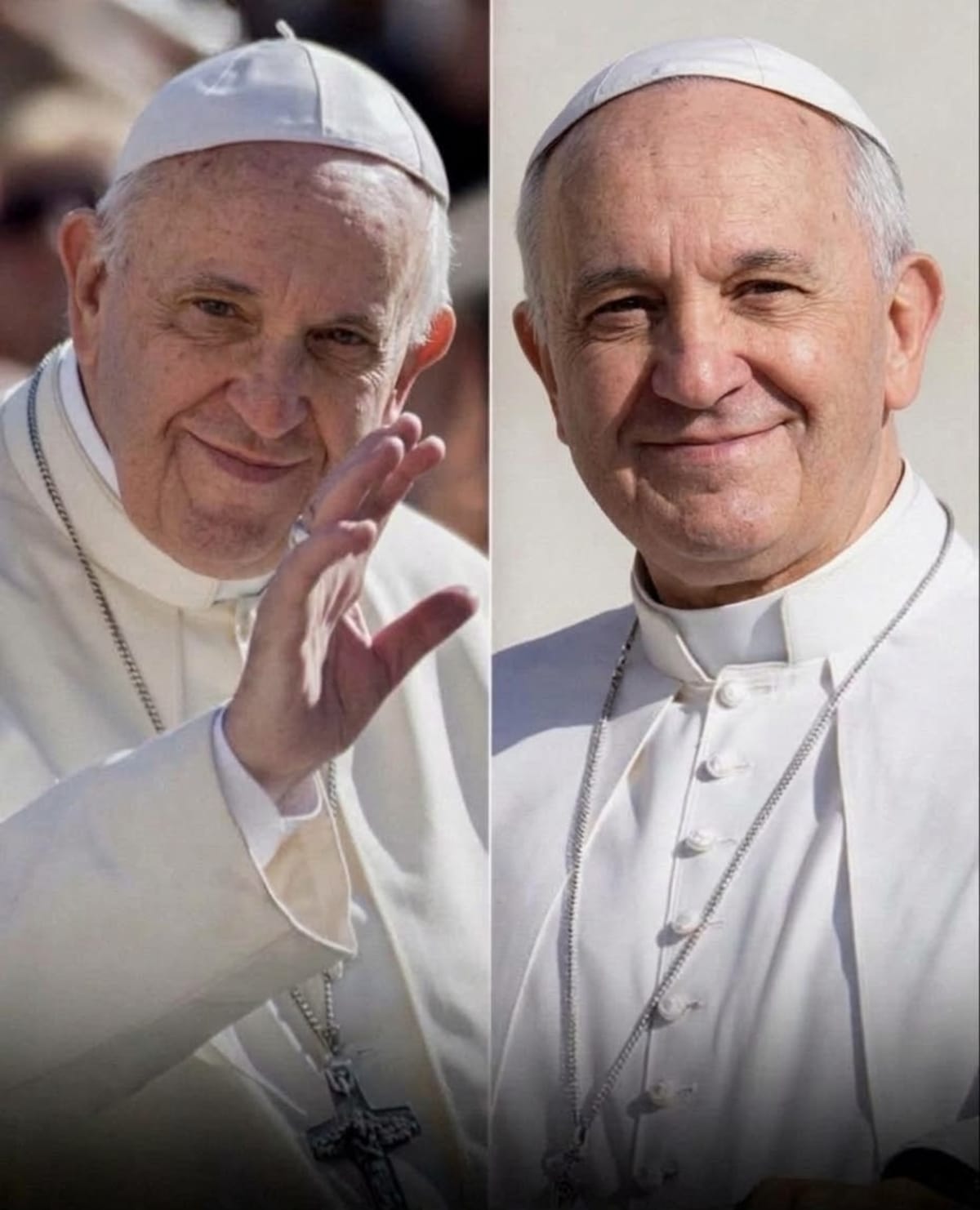
The health of a pope has always been more than a private medical matter. For millions of Catholics around the world, the man who leads the Catholic Church represents a spiritual guide, a source of moral authority, and a symbol of continuity in a world that often feels uncertain. When questions arise about his health, people naturally want to know whether he is safe, whether he can continue his responsibilities, and what his condition might mean for the future of the Church.
According to the report described here, Pope Leo XIV, 71, underwent surgery for lung cancer on October 13. The procedure involved removing the lower section of his right lung, an operation known medically as a lobectomy. The Vatican reportedly described the surgery as successful, offering reassurance to Catholics and observers concerned about the pontiff's condition.
Although the word "cancer" can immediately create fear, the removal of a section of the lung is an established medical procedure that doctors use in certain cases of lung cancer. When a tumor is confined to a particular area and the patient is considered suitable for surgery, removing the affected section can be an important part of treatment. The remaining lung tissue can continue to function, and many patients gradually adapt to changes in their breathing capacity.
Nevertheless, a successful operation does not automatically mean that every medical concern has disappeared. Recovery depends on numerous factors, including the type and stage of cancer, the patient's general health, the condition of the remaining lung tissue, and whether additional treatment is necessary.
For a pope, these questions take on an additional dimension. His recovery must be considered not only in terms of medical progress but also in relation to the extraordinary responsibilities of leading a worldwide religious institution.
The reported situation also brings back memories of Pope Francis, who lost part of one lung as a young man after suffering a serious respiratory illness. Despite that experience, Francis went on to live a long and active life, eventually becoming pope and leading the Catholic Church for twelve years.
The circumstances surrounding the two cases are different, but they raise an important question: how much can a person continue to accomplish after losing a portion of a lung? They also invite a broader discussion about the relationship between health, leadership, privacy, and public responsibility.
Understanding the Surgery: What Is a Lobectomy?
To understand the significance of the reported operation, it helps to begin with the anatomy of the lungs and the reasons doctors sometimes remove part of them.
The lungs are essential organs responsible for bringing oxygen into the body and removing carbon dioxide. Every cell in the human body depends on a continuous supply of oxygen to function properly. Without an effective respiratory system, the heart, brain, muscles, and other organs cannot perform their normal activities.
Although the lungs may appear to be two simple structures, their internal organization is considerably more complex. The right lung has three lobes: the upper, middle, and lower lobes. The left lung has two lobes, partly because the heart occupies space on the left side of the chest.
Each lobe contains smaller structures, including airways and blood vessels, that work together to support breathing. Air travels through the trachea, enters the bronchi, and moves through progressively smaller airways until it reaches tiny air sacs called alveoli.
These alveoli are where the exchange of oxygen and carbon dioxide takes place. Oxygen passes into the bloodstream, while carbon dioxide moves from the blood into the lungs to be exhaled.
When lung cancer develops, the appropriate treatment depends on where the tumor is located, how large it is, whether it has spread, and how well the patient's lungs and other organs function.
In selected cases, doctors may recommend removing the lobe containing the cancer. This operation is called a lobectomy.
During a lobectomy, surgeons remove an entire lobe rather than simply cutting out the visible tumor. Depending on the circumstances, they may also remove and examine nearby lymph nodes to determine whether cancer cells have spread beyond the original location.
The goal is to remove the affected tissue while preserving as much healthy lung function as possible.
A lobectomy is a major operation. It usually requires general anesthesia, and it may be performed using traditional open surgery or minimally invasive techniques, depending on the patient's condition, the tumor's location, and the medical team's judgment.
In minimally invasive surgery, surgeons may use small incisions and a camera to operate inside the chest. Video-assisted thoracoscopic surgery and robotic-assisted techniques are among the approaches used in suitable cases. However, not every patient or tumor is appropriate for these methods.
The exact technique used in Pope Leo XIV's reported operation has not been established by the information presented here, and it would be inappropriate to assume which approach his doctors selected.
What matters most is that removing a lung lobe is a recognized treatment option for certain forms of lung cancer. It is not an experimental procedure, and it does not necessarily prevent a patient from returning to an active life.
Why Would Doctors Remove an Entire Section of the Lung?
One of the most common questions surrounding this type of surgery is why doctors would remove an entire lobe instead of taking out only the tumor.
The answer involves both cancer control and the structure of the lungs.
Cancer is not always limited to the visible mass that appears on a scan. Microscopic cancer cells may exist in nearby tissue, and the tumor may extend into surrounding structures that cannot be fully appreciated by looking at the outer surface alone.
For certain lung cancers, removing the entire affected lobe can provide a better chance of achieving clear surgical margins. A clear margin means that no cancer cells are identified at the edge of the removed tissue.
The operation may also allow doctors to examine lymph nodes and determine whether the disease has spread locally.
However, lobectomy is not automatically the best treatment for every person with lung cancer. Some patients may benefit from a smaller operation, such as a segmentectomy or wedge resection. Others may require radiation therapy, medication, immunotherapy, chemotherapy, or a combination of treatments.
The decision depends on a detailed evaluation of the individual patient.
Doctors generally consider the type of cancer, its stage, the likelihood of completely removing it, the patient's breathing capacity, and the risks associated with surgery. Age alone is not enough to determine whether someone can undergo an operation safely.
A healthy 71-year-old may be a better surgical candidate than a younger person with serious heart or lung disease. Conversely, an older patient with limited respiratory capacity may face greater risks.
This is why medical teams conduct extensive examinations before recommending major lung surgery. Tests may include imaging studies, blood tests, pulmonary function testing, and assessments of heart health and overall fitness.
In the case described, the Vatican reportedly characterized the operation as successful. That is an encouraging statement about the procedure itself, but it does not provide all the information needed to determine the long-term outlook.
Without confirmed details about the cancer's type, stage, surgical findings, and any additional treatment plan, it is not possible to make a reliable prediction about the pope's prognosis.
What Happens When a Person Loses Part of a Lung?
The idea of living with less lung tissue can sound frightening. Many people assume that removing part of a lung must make normal life impossible or permanently prevent a person from carrying out demanding activities.
The reality is more complicated and, in many cases, more reassuring.
Human lungs have a certain amount of functional reserve. This means that a person does not necessarily need to use the full capacity of both lungs during every moment of everyday life.
At rest, the respiratory system generally works well below its maximum possible capacity. During exercise or other physically demanding activities, the body requires more oxygen, and breathing becomes faster and deeper.
After a lobectomy, the remaining lung tissue can continue exchanging oxygen and carbon dioxide. The body also adjusts to changes in the space and mechanics of the chest.
Over time, the remaining lung may expand to occupy some of the space previously taken up by the removed tissue. Other parts of the respiratory system can also contribute to compensating for the loss of lung volume.
This process should not be confused with the growth of a completely new lung lobe. In adults, the removed lobe does not simply regenerate into a replacement structure. Instead, the remaining lung and the body adapt to the altered anatomy.
The degree of compensation varies significantly from one person to another.
Someone with healthy lungs before surgery may retain enough respiratory capacity to walk, travel, work, and participate in many ordinary activities without major restrictions. Another person may experience persistent shortness of breath, particularly when climbing stairs, walking uphill, or exercising.
The difference depends on the amount of lung tissue removed, the condition of the remaining lung, the patient's age and physical fitness, and whether other conditions affect breathing.
For example, a person with chronic obstructive pulmonary disease, significant scarring, or another respiratory disorder may have less reserve available after surgery. Someone who had excellent lung function before the operation may have a more comfortable recovery.
This is one reason doctors measure pulmonary function before and after major lung surgery when appropriate.
A successful lobectomy does not mean that breathing will be exactly the same as before. It means that the operation has achieved its immediate medical objectives, which may include removing the affected tissue safely.
The longer-term outcome depends on healing, rehabilitation, and the underlying disease.
The Recovery Process: Why the First Weeks Matter
Recovery after lung surgery is rarely instantaneous.
Even when an operation goes according to plan, the body needs time to heal from the effects of anesthesia, surgical manipulation, and the removal of lung tissue.
Immediately after surgery, patients are usually monitored closely. Medical staff pay attention to breathing, oxygen levels, heart rate, pain, wound healing, and possible complications.
A chest tube may be used temporarily to drain air or fluid from the chest cavity and help the remaining lung tissue function appropriately. The need for a chest tube and the length of time it remains in place depend on the surgical circumstances and the patient's progress.
Pain management is another important part of recovery. If pain prevents a patient from taking deep breaths or coughing effectively, secretions may accumulate in the airways, increasing the risk of respiratory complications.
For this reason, medical teams encourage appropriate pain control, breathing exercises, and movement as soon as these activities are safe.
Patients are often encouraged to sit up, stand, and walk relatively early in their recovery. Although rest is important, prolonged immobility can increase the risk of blood clots, muscle weakness, and other complications.
Walking also helps the body gradually regain stamina.
Respiratory exercises may be recommended to encourage effective breathing and help the patient use the remaining lung tissue. In selected cases, pulmonary rehabilitation can provide structured support through exercise, education, and techniques for managing breathlessness.
The pace of recovery differs from person to person. Some patients return to many everyday activities within several weeks, while others need months to regain their previous level of endurance.
It is therefore important not to assume that a successful operation on October 13, as described in the report, would necessarily allow Pope Leo XIV to resume every responsibility immediately.
A pope's schedule can include long ceremonies, extended periods of standing, travel, public appearances, meetings, and frequent changes in routine. Even when an individual feels well at rest, these activities can place considerable demands on the respiratory system.
A gradual return to duties may be more appropriate than attempting to resume a full schedule at once.
The medical team would be best positioned to determine what level of activity is safe, based on the patient's progress and clinical assessments.
Could Pope Leo XIV Continue Leading the Catholic Church?
For Catholics, the pope's health is not simply a question of whether he can perform physical activities. It is also a question of whether he can continue fulfilling the spiritual, administrative, and diplomatic responsibilities associated with his office.
The pope leads a global religious institution that includes dioceses, clergy, religious communities, charitable organizations, educational institutions, and millions of faithful people.
His responsibilities may include celebrating Mass, delivering public addresses, meeting religious leaders, receiving heads of state, appointing bishops, making administrative decisions, and communicating with Catholics across different cultures and countries.
Some of these responsibilities require substantial physical energy. Others depend primarily on concentration, judgment, communication, and the ability to make decisions.
A reduction in lung capacity does not automatically undermine those abilities.
If recovery proceeds well and the pope retains adequate respiratory function, he may be able to continue many of his duties. He might, however, need adjustments to his schedule, fewer demanding appearances during recovery, or additional periods of rest.
Modern medicine allows many people to live productive lives despite significant changes in their physical health. A person can have a chronic condition, reduced organ capacity, or a history of major surgery and still remain mentally sharp, professionally active, and socially engaged.
Leadership does not require a person to be physically invulnerable.
In fact, the ability to recognize physical limitations and adapt to them can be an important part of responsible leadership.
The Church also has institutional mechanisms for dealing with periods when a pope is unable to carry out particular activities. Administrative responsibilities can be distributed among relevant officials, and public engagements can be postponed or delegated where appropriate.
Temporary medical limitations do not automatically create a constitutional or religious crisis.
Nevertheless, the pope's specific condition matters. Cancer treatment can involve more than surgery, and subsequent therapies may have their own effects on energy, concentration, appetite, and general well-being.
The information provided does not establish whether Pope Leo XIV requires additional treatment or how his doctors expect his recovery to progress.
Until reliable medical information becomes available, it is better to avoid both extremes: assuming that his leadership must be seriously compromised, or insisting that the surgery will have no meaningful effect on his daily life.
A balanced view recognizes that the operation may be a significant medical event while leaving open the possibility of a successful recovery and continued leadership.
Pope Francis and the Experience of Living With Reduced Lung Capacity
The reported surgery has another historical point of comparison: Pope Francis, who experienced the loss of part of a lung decades before becoming pope.
As a young man in Argentina, Francis suffered a serious respiratory illness. At approximately 21 years of age, in 1957, he underwent surgery that resulted in the removal of part of his right lung.
This event occurred long before his election as pope in 2013. For many years, he lived with the consequences of that earlier illness while continuing his religious formation and pastoral work.
Francis eventually became one of the most recognizable religious leaders in the world. He traveled internationally, met political leaders, celebrated religious ceremonies, and addressed major social and moral issues.
His life demonstrated that losing part of a lung does not necessarily prevent someone from undertaking demanding responsibilities.
However, it is important to understand that Francis's medical history was different from the situation described for Leo XIV.
Francis's lung surgery was associated with a severe infection, according to accounts of his early life. The report concerning Leo XIV, by contrast, describes surgery for lung cancer.
These conditions have different causes, treatment considerations, and possible long-term implications.
A person who loses lung tissue because of an infection is not necessarily facing the same risks as someone undergoing surgery for a malignant tumor. Cancer treatment may require ongoing monitoring for recurrence and, depending on the diagnosis, additional therapies.
The two experiences therefore should not be treated as medically identical.
What they share is a broader lesson about the human body's ability to adapt.
Francis's experience illustrates that a person can live for decades after losing part of a lung and can still take on responsibilities that affect millions of people.
It does not prove that Leo XIV will have the same medical outcome, but it offers a useful historical example of what may be possible.
The comparison also challenges the assumption that a serious medical history automatically disqualifies someone from demanding leadership.
People often judge health by appearances. Someone who speaks confidently, walks without assistance, and performs public duties may seem completely healthy, even when living with a permanent physical limitation.
Conversely, news of surgery or a diagnosis can lead people to assume that an individual is suddenly incapable of functioning normally.
Both assumptions can be misleading.
A person's actual abilities depend on a combination of medical factors, rehabilitation, available support, personal circumstances, and the demands of the activities they wish to perform.
Why Cancer Is Different From Other Causes of Lung Damage
Although the comparison between the two popes is understandable, lung cancer deserves special consideration because removing the affected tissue is only one part of a potentially longer medical process.
Lung cancer is not a single disease. It includes different types of tumors that behave differently and respond to different treatments.
Two broad categories are non-small cell lung cancer and small cell lung cancer. Non-small cell lung cancer includes several forms, such as adenocarcinoma and squamous cell carcinoma.
The precise diagnosis matters because it influences treatment decisions, the likelihood of spread, and the role surgery may play.
For some patients with early-stage non-small cell lung cancer, surgery can offer an important opportunity to remove the disease. In other cases, the cancer may have spread to lymph nodes or distant organs, making additional treatments necessary.
Doctors use imaging, tissue analysis, and other tests to determine the most appropriate treatment strategy.
Even after a tumor has been removed, follow-up care remains essential. Medical teams may recommend periodic imaging and appointments to monitor recovery and identify signs of recurrence or a new cancer.
Depending on the findings, a patient may also be considered for chemotherapy, targeted therapy, immunotherapy, or other treatments.
Not every person needs all of these interventions. Some patients may require no additional cancer treatment beyond surgery and surveillance, while others benefit from a broader treatment plan.
Without verified information about the reported diagnosis, it would be irresponsible to speculate about which category applies to Pope Leo XIV.
The fact that doctors reportedly removed a lung lobe does not, by itself, reveal the stage of the cancer or establish whether the disease was completely eliminated.
Equally, the word "cancer" does not automatically mean that a person is facing an immediate life-threatening crisis. Outcomes vary widely according to the type and stage of the disease and the patient's overall condition.
Modern cancer medicine has made important advances in diagnosis, surgery, and treatment. Some forms of lung cancer can be treated successfully, particularly when detected at an early stage.
However, lung cancer remains a serious illness, and no responsible discussion should turn a report of successful surgery into a guarantee of a cure.
The appropriate conclusion is more measured: the reported operation represents an important medical intervention, and the long-term outlook depends on information that has not been established here.
What Does a Successful Operation Actually Mean?
When an institution announces that a medical operation has been successful, the statement can be reassuring. Yet the word "successful" can mean different things depending on the context.
In surgical language, success may refer to the fact that the planned