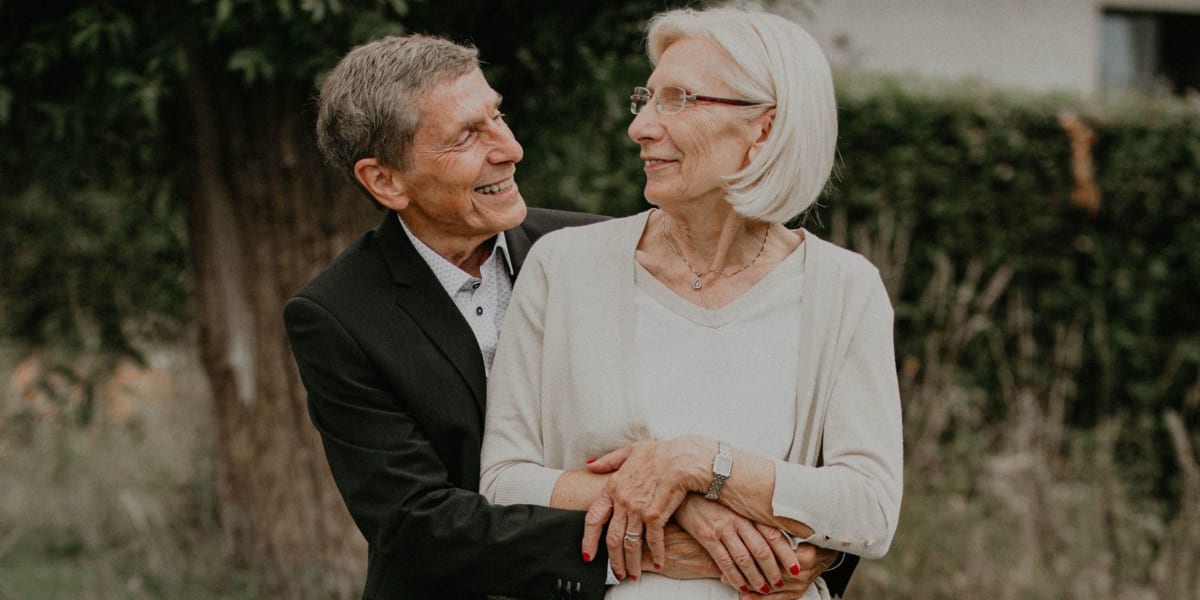
I'm the pastor of a local church, and several times a week, I visit the hospital to spend time with terminally ill patients. Recently, I learned that a new patient had been admitted — a woman with stage-four cancer.
I decided to go meet her too.
And when I walked into her hospital room, my heart nearly stopped.
I immediately recognized the woman lying in the hospital bed.
It was Margaret.
The girl I had loved in high school, the girl I had gone to prom with. Then we left for different colleges, and somehow 45 years passed.
I couldn't believe my eyes.
"Margaret?"
The woman in the bed looked up, squinted as she studied my face, and suddenly burst out laughing.
"Wow! Tommy? Is that you? This can't be real!"
I started visiting Margaret every day.
We would talk for hours, remembering our school years. Even with IV lines in her arms, she never lost her sense of humor.
That was Margaret.
She had always smiled, even when everything around her was unbearable.
We'd sit by the window, and she'd tell me about her life — how she'd moved out west, raised her son, became a teacher. She asked about my journey too, how I'd found my calling as a pastor.
"It's funny," Margaret said one afternoon, staring out at the sky. "I used to pray you'd find your path."
I hadn't realized she'd thought about me over the years.
Then one day, she told me the doctors had given her only a week to live.
I couldn't say a word. I had a lump in my throat.
But Margaret just squeezed my hand tightly.
"Oh, don't look so sad, Tommy! Remember how you promised to marry me when we were seventeen?"
I nodded, holding back tears.
"Well, you're forty-five years late, mister. How about we finally do it?"
I laughed through my tears.
"Margaret, are you joking? You want us to get married?"
She smiled and said:
"Yes. It would mean everything to me. Maybe it sounds strange, but Tommy, I would really love that. Would you do that for me?"
And I agreed.
I agreed because I remembered those wonderful days when we were together. I remembered how happy I had been with her.
I called my lawyer and made arrangements. There was a chaplain at the hospital who could officiate. We didn't need much — just witnesses, and Margaret's son was happy to stand by.
Three days later, we got married right there in her hospital room.
I wore the same suit I wear to church because I didn't have another one, and I quickly bought two simple wedding bands at a flea market.
Margaret's ring had a pink heart on it because there was hardly anything else to choose from. She laughed so hard when she saw it and said it was her favorite ring in the world.
We said our vows standing beside her bed. Margaret's voice was weak, but her eyes were bright.
"I promise to love you, Tommy. Even if I only get to be your wife for a few days, I'm going to love you with everything I have left."
I couldn't speak. I just nodded and slipped the ring on her finger.
For a few precious days, I was her husband.
We held hands. We talked about our favorite memories. She told me stories I'd never heard before, and I told her how proud I was that she'd become such a dedicated teacher.
Five days later, Margaret was gone.
My heart was broken, but I was grateful that I had found her again.
After the funeral, I was standing outside the church when her son approached me.
He looked nervous. In his hands, he was holding a sealed envelope.
"Tom, there's something you need to know."
Then he handed me the envelope.
"You don't know the whole truth about Mom. She left this for you and asked me to give it to you only after she was gone."
I opened the envelope, unfolded the piece of paper inside, and read the first line.
My knees nearly gave out.
The letter began with "My dearest Tommy," and as I read, my hands started shaking.
"I know this will shock you," the letter read, "but I need to tell you the truth about what really happened to us."
I found a bench and sat down, my vision blurring.
Margaret had written that she'd never actually left for college. Her parents had forced her to leave town because she was pregnant.
With my child.
I had to read that sentence three times before it made sense.
"I was seventeen years old, and I didn't know what else to do," she continued in her careful handwriting. "My parents were furious. They said I would ruin my life, that you would ruin your life. They sent me to stay with my sister across the country, and they never told you."
I couldn't breathe.
I had no idea. I had spent decades wondering what happened to Margaret, why she had disappeared without saying goodbye.
"My son isn't just my son, Tommy. He's your son. Our son. He has your last name as his middle name, which no one ever noticed. I kept that secret for forty-five years."
I looked up at her son, who was standing a few feet away, watching me read.
He was my son.
His name was David, and he was a grown man with his own family. Margaret had raised him alone, never told him the truth until near the end.
"She told me everything about you," David said quietly. "She talked about you all the time. I grew up hearing stories about Tommy the love of her life."
I couldn't speak.
David continued, "She got sick, and she knew she was dying. She made me promise to tell you everything. She said she wanted you to know before she left this earth, but she was too afraid of how you'd react."
So she did it this way.
She orchestrated this entire reunion, knowing exactly who she was looking for in me.
The letter went on to explain that she'd spent her whole life loving me from a distance. She'd followed my career in the church through mutual friends. She knew I'd never married, and she said that had always given her a strange kind of hope.
"I couldn't ask for a second chance with you," she wrote. "But God brought you to my bedside, and I couldn't waste it. When I asked you to marry me, I was asking for the one thing I'd always wanted. To be yours, even if only for a moment."
There was more in the letter.
Margaret had left instructions for me to meet with David to learn about his life, about her life, about the son we never got to raise together.
She wanted me to be part of his family, to know his children — my grandchildren — if he would have me.
"You deserve to know your family, Tommy. And they deserve to know you," she'd written.
I folded the letter carefully and looked up at David with tears streaming down my face.
"I didn't know," I whispered.
"I know," David said. "She never wanted to tell you when you were younger. She thought you'd feel obligated to her, and she wanted you to live your own life. But when she got sick, she couldn't leave this earth without you knowing the truth."
Over the following weeks, I spent time getting to know my son.
I learned that David had become a good man. He was a nurse, which meant he spent his life caring for others — just like his mother had. He had three children, all of them teenagers, all of them curious about their grandfather.
We sat at a coffee shop one afternoon, and David asked me if I was angry.
"Angry at who?" I asked.
"At my mom. For keeping this from you. For not telling you about me."
I thought about it carefully.
"No," I finally said. "I'm not angry. I'm sad about the years we lost. But I'm grateful that we found each other at the end. I'm grateful that she trusted me with this truth."
David smiled.
"She talked about you constantly, especially toward the end. She said that you were the person she loved most in her life. I think on some level, she always held onto hope that maybe somehow, the universe would bring you back to her."
And it did.
Just not in the way either of us could have predicted.
I learned details about Margaret's life that filled in the gaps of 45 years. I learned about her heartbreak, her strength, her quiet love that never went away. I learned that she'd written letters to me over the decades, letters she never sent. David had boxes of them.
When I read those letters, I wept.
She had watched my life from afar through our small-town connections. She knew when I became a pastor. She knew when I lived through difficult times. She had written to me about her pride in my work, her joy at my accomplishments, her sorrow at my loneliness.
She had been there, in a way, even though I never knew it.
The day I met my grandchildren for the first time, they called me Grandpa, and I realized that Margaret's love had extended through time and generations in ways I never could have imagined.
On my deathbed someday, I will think about those five days as Margaret's husband.
I will think about her pink-hearted wedding ring.
I will think about how the girl I loved in high school never stopped loving me, even when the world pulled us apart.
And I will understand that sometimes, love doesn't work on our timeline.
Sometimes it works on God's.