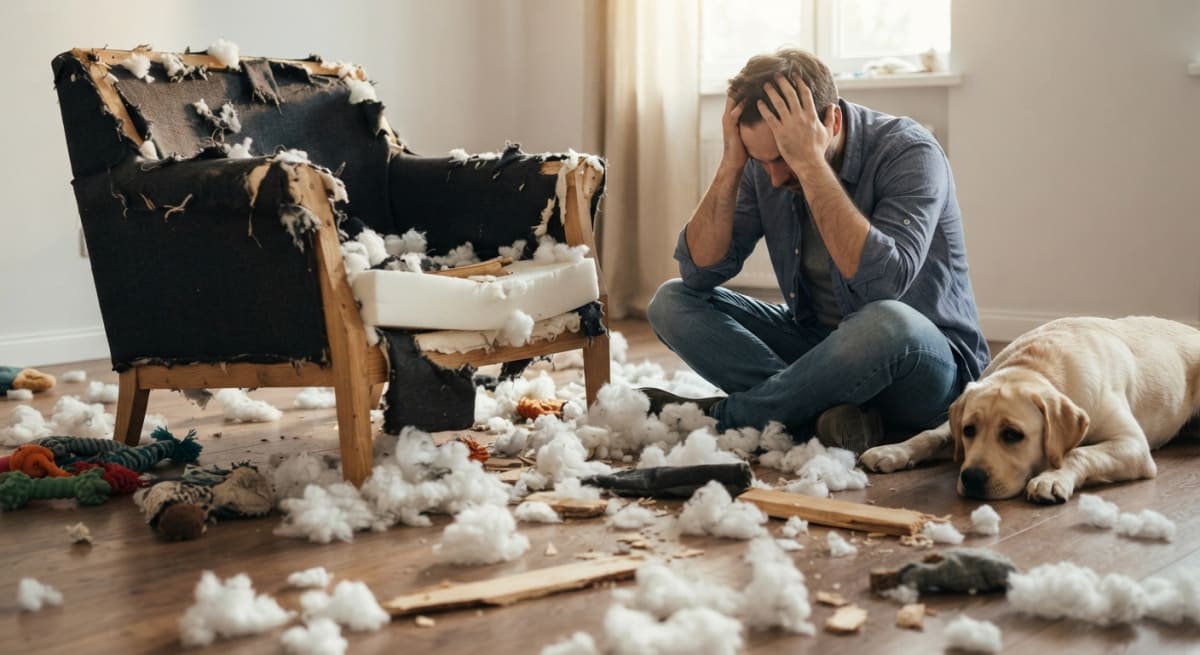
I got Rex, a Labrador puppy, three years ago, and I remember thinking that a dog would simply slot into my life the way people always claim pets do — a little extra warmth around the house, a companion for evening walks, nothing more complicated than that. The first few weeks felt like proof I was right. He slept most of the day, followed me from room to room, and seemed content with whatever scraps of attention I gave him between work calls. I told myself I had this figured out, that some people just make raising a dog look harder than it is. That confidence lasted almost exactly a month.
Then came the day I walked in after a nine-hour shift and found my favorite armchair in ruins — the one piece of furniture I'd actually saved up for, shredded down to the frame, foam and fabric scattered across the living room like the aftermath of a small explosion. My first reaction wasn't sadness, it was rage. I yelled at him, loudly, the way you'd scold a person who knew exactly what they were doing. Rex flattened himself against the floor, ears back, tail tucked, clearly terrified of me. And that's when the anger drained out and something worse replaced it: shame. He hadn't betrayed me. He was a bored, understimulated, anxious animal who had been left alone for most of his waking hours with nothing to occupy either his body or his mind. I sat down among the wreckage that evening and admitted to myself that the real problem in the room wasn't the dog — it was my own assumption that love alone was enough, without any of the structure, time, or effort a dog actually requires.
What actually helped:
Exercise before alone time, not after. I used to think a walk was a reward for good behavior. It's actually prevention. A tired dog is a calm dog — twenty to thirty minutes of real physical activity before I leave the house changes his entire mood for hours afterward. Skipping it is basically inviting trouble. Boundaries have to exist from day one, not appear after the damage is done. Puppies don't intuit what's off-limits; they learn it through calm, consistent repetition, every single time, not just when I happen to notice them chewing something. Inconsistency was my biggest mistake early on — I'd correct him one day and ignore the same behavior the next. Enrichment matters more than the number of toys in the basket. A chew toy sitting untouched in the corner does nothing for a bored mind. Puzzle feeders, frozen treats, scent games, and rotating which toys are available keep him mentally engaged in a way that passive ownership never will. Correction has to happen in the moment, calmly — not as punishment afterward. Dogs live entirely in the present; yelling at him for something he did hours ago taught him nothing except that I was unpredictable and occasionally frightening. Redirecting behavior as it happens, without anger, works far better than any amount of scolding later.