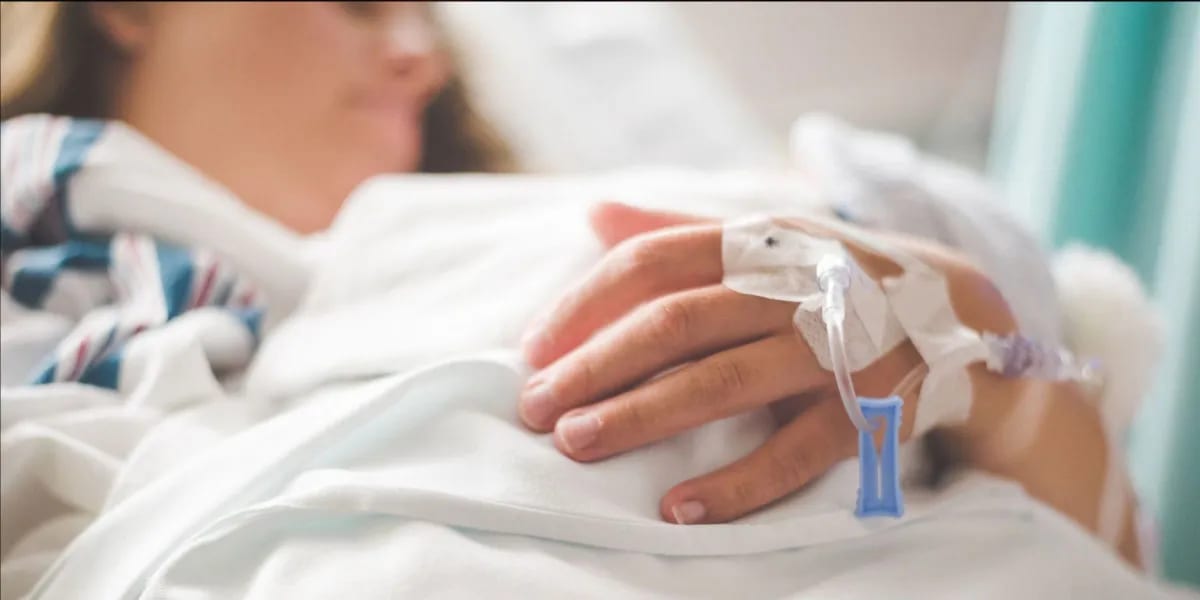
Every day after school, Noah went straight to his mother's hospital room and stayed as long as the adults would let him. But when Jeremy finally insisted he come home on a Saturday, the boy said something that made him stop arguing.
My wife had been in a coma for two months, and our seven-year-old hadn't spent a single day away from her room.
That Saturday night, I tried to talk him into at least coming home to sleep.
Because of "what happens in Mom's room on Saturdays."
I was on a work trip when my mother called me two months earlier. I still remember exactly where I was standing when my phone rang.
I was outside a conference room, staring through a window at a parking garage six floors below, irritated because the meeting had run late.
Then I heard my mother's voice.
"Jeremy, you need to come home."
Something in the way she said my name made my stomach drop.
"It's Emma. She's in the hospital. She's in a coma. Noah's with her, and he won't leave the room, and you need to drop everything and get here."
I didn't let her finish the sentence.
I grabbed my bag and left.
I will not forgive myself for not being there.
I know that's not rational.
I honestly don't know how.
Every single day without Emma felt like a year, and somehow the weeks disappeared anyway.
Noah was seven. He went to school because we insisted, but every afternoon my mother picked him up and drove him straight to the hospital.
He didn't want to go anywhere else.
He ate dinner beside Emma's bed.
He did homework in the chair by the window.
Sometimes he fell asleep with his head resting beside her arm.
He asked to sleep there almost every night.
And he'd done it more times than he should have.
My mother and I had started talking about it quietly.
He needed to be a kid for an hour a day.
He needed to sleep in his own bed.
So that Saturday, I sat down next to him.
He was bent over a superhero comic, his sneakers barely reaching the floor.
Noah was a Marvel kid. He knew all of it. Every character. Every storyline. Every impossible resurrection and alternate universe.
I tried to speak his language.
"Buddy. Listen. I know you're Mom's protector. But even superheroes have to go home and rest, or they can't protect anybody. Let's go home tonight."
Not dramatically. He just closed the comic.
"I can't do Saturdays. Mom won't have anyone to talk to."
For a second, I thought he was playing.
"Don't joke about that, Noah."
"I'm not joking." He sounded almost annoyed with me. "She only talks to me."
"It's our little secret."
"Noah." I lowered my voice. "I know this is hard to accept. But Mom's not able to talk right now. She can hear you. I really think she can hear you. But she can't answer. That's what the coma means."
He looked at me for a long moment.
Then he said, "So why are you scared to stay in the room with me?"
"Stay tonight," he said. "Stay and we'll see."
Maybe I should have questioned him more.
At first, nothing happened.
Noah went back to his usual Saturday routine. He told Emma about school. He told her he'd gotten every spelling word right except "separate," which he insisted was a stupid word because it had too many vowels.
He told her Grandma had burned pancakes that morning.
From the chair near the wall, my mother protested.
"They were a little dark."
Emma lay still between us.
A monitor kept its steady rhythm. The room smelled faintly of disinfectant and the lotion my mother rubbed onto Emma's hands because her skin had become dry.
After almost an hour, my mother went home.
That mattered to Noah. I could tell.
He kept glancing at me as though he expected me to find an excuse to leave.
Around seven, I almost did.
I stood up and said, "I'm going to get coffee."
Noah immediately looked at me.
"I am staying. I'm just getting coffee."
"There's coffee down the hall."
"Then why do you need to go downstairs?"
There was no accusation in his voice. Just a question.
"You know what? I don't."
Noah nodded like I'd finally answered correctly.
Another 20 minutes passed.
Then he pushed his chair closer to Emma's bed.
"Okay, Mom," he said quietly. "Dad's here this time."
Something about those words bothered me.
Noah slipped his hand under Emma's.
"Mom, is Dad here with us?"
Her eyes remained closed.
I nearly told him that was enough.
Then Emma's index finger moved.
It wasn't much. Barely more than a twitch.
I stood so quickly my chair scraped the floor.
"Her hand could've twitched."
"One means yes. Two means no."
My heart was beating hard now, but I forced myself not to turn a tiny movement into something it wasn't.
People in Emma's condition sometimes moved.
Reflexes happened. Random movements happened.
I pulled my chair beside Noah.
He asked another question.
The room seemed to shrink around me.
"I didn't say you were. Just take your hand away."
Emma's hand rested alone on the blanket.
I asked the next question myself.
"How long has she been doing this?"
"Like... four Saturdays."
My voice came out sharper than I intended.
"Why didn't you tell me?"
"I said Mom moved when I talked to her. They said people in comas can move and it doesn't mean they're awake."
That sounded painfully plausible.
Someone had probably tried to reassure him gently.
Instead, he'd heard something else.
"I would've believed you."
Noah looked straight at me.
The certainty in his voice hurt.
"Because you and Grandma were talking."
"Outside. You said maybe I shouldn't be here so much. Grandma said maybe I needed some space from Mom."
I remembered the conversation.
We hadn't been trying to take Emma away from him.
We were worried about him.
He had heard adults discussing him outside his mother's hospital room, and he had filled in the blanks himself.
"I thought if I told you," he said, "you'd say I was making it up. Then you'd make me go home."
"Buddy, we were worried you weren't sleeping."
My son had been sitting beside my wife, asking her questions, receiving what he believed were answers, while I had been walking in and out of the room.
Then I remembered what he'd said earlier.
"So why are you scared to stay in the room with me?"
"Why did you say I'm scared?"
He gave me that same puzzled look.
"Noah, I'm here every day."
He started counting on his fingers.
"You get coffee. You talk to Grandma outside. You take work calls. You ask the nurses stuff. You go get food. You say I should have alone time with Mom."
Each sentence landed harder than the last.
I opened my mouth to defend myself.
Every example had an explanation.
I needed coffee because I barely slept.
I talked to my mother because Noah shouldn't hear every difficult conversation.
Some work calls couldn't be avoided.
Talking to the nurses was responsible.
Getting food was necessary.
But Noah wasn't finished.
"You come here all the time," he said. "But when it's quiet, you always leave."
Because suddenly I saw myself the way my son had been seeing me.
Always finding something useful to do.
Anything except sitting beside Emma when there was nothing between us but silence.
"I think you're scared she's gonna remember."
My entire body went still.
For a moment, I couldn't hear anything except the monitor.
"When did you hear us fighting?"
"Before you went on your trip."
I had told myself Noah was upstairs.
He must have been halfway down the staircase.
Emma and I hadn't screamed. We rarely screamed.
Somehow that made the memory worse.
She'd been standing in the kitchen with her arms folded.
"I am asking you to stay," she'd said.
"It's not about three days."
"I know it matters. Everything matters when it's work."
I remembered grabbing my suitcase.
I remembered her looking at me.
I remembered saying, "We can talk when I get back."
She never got the chance.
Noah picked at the edge of the blanket.
"Was Mom mad because you left?"
"Is that why you don't stay?"
Instead, I leaned back and stared at the ceiling.
I had spent two months telling him that Emma's condition wasn't anybody's fault.
I had told him over and over that nothing he'd said or done had caused it.
Yet I'd never extended that mercy to myself.
"I thought the trip was important. And it was. But your mom wasn't really angry about one trip."
"What was she angry about?"
I chose my words carefully.
"She thought I was good at doing things for our family, but not always good at being with our family."