I was deployed overseas when Grace told me she was pregnant.
Our calls were short. Bad connection, different time zones. That night, she kept holding an ultrasound picture up to the camera, and I kept asking her to move it back.
Then she held up four fingers. "Four babies, Stefan."
The screen froze, and I spent the next thirty seconds staring at her hand.
When we found out they were all girls, I cried in front of three guys I worked with. They never let me forget it.
"A whole house of princesses," I told her.
After that, I started every call with, "How are my five girls?"
To arrange leave around the birth, I agreed to extend my service commitment. I signed the paperwork and called her.
I got home a week before the delivery.
Her shoes no longer fit. She cried when she dropped things because bending down hurt. At night, I sat on the floor putting lotion on her swollen feet while she told me which daughter had been kicking her ribs.
Once, she caught me practicing with a diaper and a rolled-up towel.
"You know they move, right?"
"I'm starting with the cooperative one."
Seven days. That was all we got.
Before they took her into surgery, she asked me to hand her a hair tie.
I put it around her wrist.
"Don't send pictures to everyone until I've seen them," she said.
"Promise."
Then I kissed her and watched the doors close.
The operation took longer than they'd told me it would.
Someone came out to say our daughters were alive. I asked about Grace.
"The doctors are still with her."
After that, every time footsteps approached, I stood up.
Finally, a doctor asked me to follow him into a small room.
"I'd rather see my wife."
"Stefan. Please."
He told me she hadn't survived.
Then he told me about the decision she had made before the operation. Warned that they might not be able to save both her and the babies, she had asked them to prioritize our daughters.
"She said there were four of them."
"But I was here," I said. "Why didn't she ask for me?"
He held out a folded sheet of paper. "She asked for a pen. She made me promise to give you this."
I recognized her handwriting before I took it. He left me alone.
For a while, I just held the paper. Then I unfolded it.
"Soon you'll meet our daughters, but there's something I need to confess to you. I'm sorry to do it this way."
My hands were shaking.
"I'm sorry to do it this way" kept repeating in my head as I read on.
"The night you left for deployment, I found out about the fourth baby three days after I'd already told you about three."
I stopped reading.
I could picture it perfectly. The ultrasound tech's surprised face. The phone call she'd made me take when I was in the barracks.
"I didn't tell you right away because I was scared. Scared you'd think I was lying. Scared you'd think I'd miscounted. Scared you'd resent me for not being sure before I told you."
I sat down in that small room and kept reading.
"I wanted to get a second opinion first, but then I found myself just... not telling you. And the longer I didn't tell you, the more ashamed I became. So I stopped correcting you. I let you say 'five girls' because it felt like penance."
My wife had lied to me for nine months.
My wife had lied to me, and I was about to hold her babies, and she was gone.
"If something happens to me during delivery, I need you to know the truth before you meet them. Not because it matters to who they are, but because you deserve to know why I did what I did."
I read that sentence three times.
"I love you so much. I think you'll love them so much. But I needed you to know me—really know me—even if only after I'm gone."
There was more, but I couldn't see it through the blur.
One of the nurses came in without knocking and put a hand on my shoulder.
"Your daughters are asking for you now."
I folded the letter and put it in my pocket.
My hands were still shaking as I walked to the neonatal ward.
They had me wash my hands and arms up to the elbows. A second nurse explained how fragile they were, how I needed to support their necks, how I couldn't bring them down to my chest too quickly because of the cords and monitors.
"The first one is Iris."
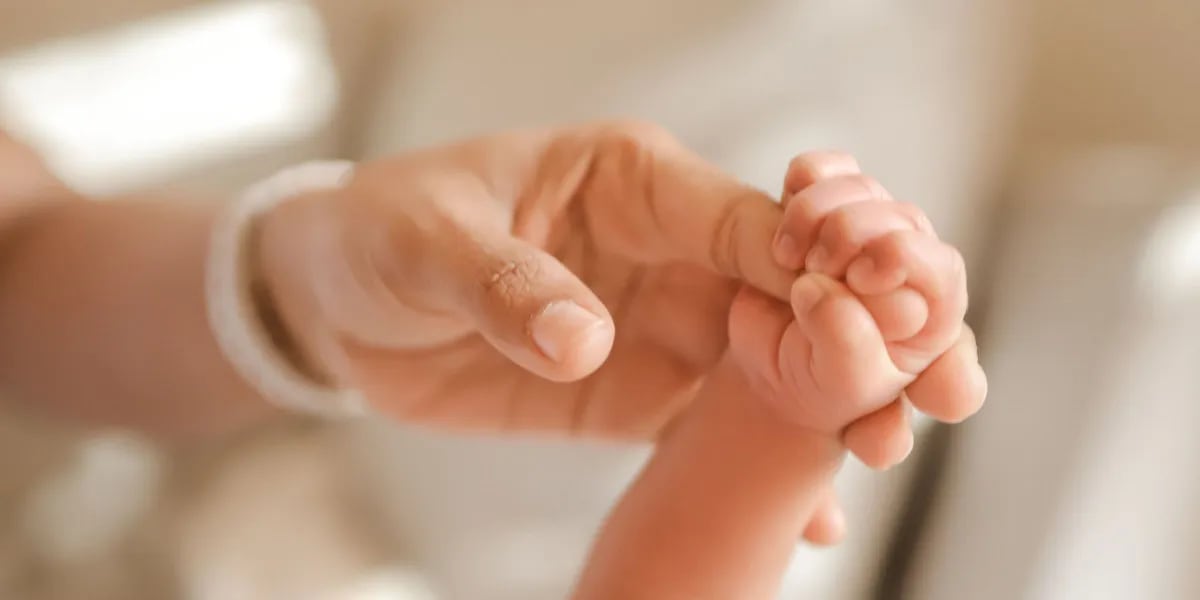
Iris was the size of a cantaloupe wrapped in a hospital blanket. Her face was red and squashed and perfect.
"Would you like to hold her?"
I said yes, and I didn't know if I was going to cry or scream or fall apart completely.
They placed her in my arms like I was handling dynamite.
She weighed less than a loaf of bread.
Her eyes were shut, her mouth was open, and she looked exactly like Grace.
I looked at Iris's face and I felt the letter in my pocket and I understood that my wife had carried this secret and this guilt for nine months. That she'd held it even as she was giving everything for these children.
She'd lied to me because she was human.
She'd come clean because she was honest.
Both things were true at the same time, and I was just learning to hold that.
The nurse took Iris back and brought me Sophie.
Sophie was smaller. Darker hair. She had a little dot of blood on her forehead from delivery.
I touched it gently, and she shifted in her sleep.
Then came Maya, who had Grace's exact chin.
Then came the fourth baby.
The one that Grace had carried silently for months.
"This is Rebecca," the nurse said.
I looked at her and I understood that my wife hadn't been able to tell me because she was terrified. Terrified that I'd blame her. Terrified that the secret would change something between us that she couldn't fix before she had to become a mother.
Terrified, like anyone would be.
Rebecca had my eyebrows.
She had my thick dark eyebrows on a face smaller than my hand.
I found myself laughing. Actually laughing in the neonatal intensive care unit while holding my youngest daughter.
The nurse looked concerned.
"She has my eyebrows."
"She does," the nurse agreed, and I think she understood.
Over the next few days, I held each of them hundreds of times. I changed diapers that Grace had warned me about. I learned to swaddle. I fed them bottles while nurses explained about pumping and donor milk and the fact that they were all going to be fine.
Everyone kept offering condolences about Grace while also congratulating me on the girls.
It was a weird kind of grief. Joyful and devastating in equal measure.
One of the pediatricians sat down with me on the third day.
"These four are fighters," he said. "And they have a fighter for a father. You're going to need to be, you know. Single parents of multiples usually end up back here within the first month with exhaustion, postpartum depression—well, in your case, postpartum grief and exhaustion. We're going to need you to have a support system."
I didn't have a support system.
My parents lived in Washington State. Grace's mother lived in Arizona. We'd moved to North Carolina for her job three years ago, and in that time we'd made friends but not the kind you could call at 3 AM asking for help.
That night, I called my commanding officer.
"I need to take my family leave."
"Already approved for three months, Stefan. You'll need to come back after."
"Actually, sir, I need to leave the service."
There was a long pause.
"Are you sure?"
"I'm sure."
The paperwork took another week. When they were released from the hospital, all four girls going home in a Ford Explorer that smelled like new car seats and my own panic, I was officially a civilian.
A civilian father of four newborns.
A man whose wife had died but left behind a confession and a reason to live.
I didn't read the full letter again for two months.
I was sleeping in forty-five-minute intervals by then, rotating through the girls, learning which one got colic at exactly 7 PM, which one ate slower, which one despised diaper changes with the fury of a tiny general.
My mother had come to stay for two weeks, and when she left, my sister drove down from DC to help for another month.
One night, my sister was asleep in Grace's office, and I had all four girls down, and I had exactly two hours before the next feeding.
I found the letter.
It was still in my jacket pocket, now crumpled and worn at the edges where I'd worried it in my hands a thousand times.
I read the whole thing that time.
After the confession, Grace had written about why she thought she'd been so afraid. Something about her perfectionism. Something about how she'd already disappointed her own mother so many times that disappointing me felt like a failure she couldn't survive.
But she'd written something else too, deeper in the letter.
"I realized, finally, that you are going to love these girls completely regardless of anything I did or didn't do. And if I can't believe that you'll forgive me—this small thing, this human thing—then I don't deserve to be their mother."
I reread that part until 4 AM.
By the time the first baby cried, I'd cried too.
I brought Iris to the bedroom and fed her a bottle, and while she ate, I told her about her mother.
"Your mom was scared," I said to her tiny scrunched-up face. "And she did something that scared her even more—she told the truth anyway."
Iris's eyes were closed, but her mouth worked steadily on the bottle.
"I think she was braver than she knew."
Over the next year, I learned that being a father to four was like being in survival mode. No, like being in a completely different kind of war—one without weapons but with many more casualties: sleep, autonomy, any semblance of a social life.
I had to hire someone to come during the day while I worked from home. I had to let my mother move in for six months. I had to accept help from people I barely knew because Pride became a luxury I couldn't afford.
One night, when the girls were almost a year old, I was putting them down for bed.
They were in two cribs in what used to be Grace's office. By then, they'd developed distinct personalities that were nothing short of astonishing to me. Iris was serious. Sophie was a fighter. Maya was cautious. Rebecca was the wild card—she'd surprise you.
Just like their mother had surprised me.
Just like her confession had surprised me and devastated me and, eventually, made me understand her better than I had when she was alive.
I kissed each of them on their foreheads and thought about Grace.
I hadn't replayed her lie in my head for months by that point. I'd forgiven her somewhere between Sophie's ear infection and Maya's mysterious rash and Rebecca's ability to destroy a diaper change with the efficiency of a demolition crew.
It's hard to hold onto resentment when you're living a life that only exists because of her decision.
She chose four babies over one more breath.
She chose to confess over protecting herself.
She chose to be honest in the only way she still could be, through a letter, through her actions, through the life she'd arranged before she left.
My sister called me one morning when the girls were fourteen months old.
"How are you holding up?"
"Tired," I said. "But holding up."
"You should think about dating eventually."
I laughed. "I'm 33 and I spend every waking moment covered in spit-up. That's going to be a great profile."
But she was right, in the way sisters are.
I wasn't going to be alone forever.
The girls weren't going to be only-me forever.
And someday, I'd have to figure out how to explain their mother to them. How to explain that she loved them so much she died for them. That she was scared and human and imperfect and also braver than almost anyone I'd known.
That sometimes love means making a confession you don't have to make. That sometimes it means risking everything for honesty.
Iris, Sophie, Maya, and Rebecca.
Four fighters from a fighter.
And every morning, I look at Rebecca's little angry eyebrows—my eyebrows—and I think about Grace.
I think about the letter.
I think about the confession that saved me from drowning in anger after she was gone.
She was the strongest person I've ever known, and I didn't fully understand it until she was already gone.