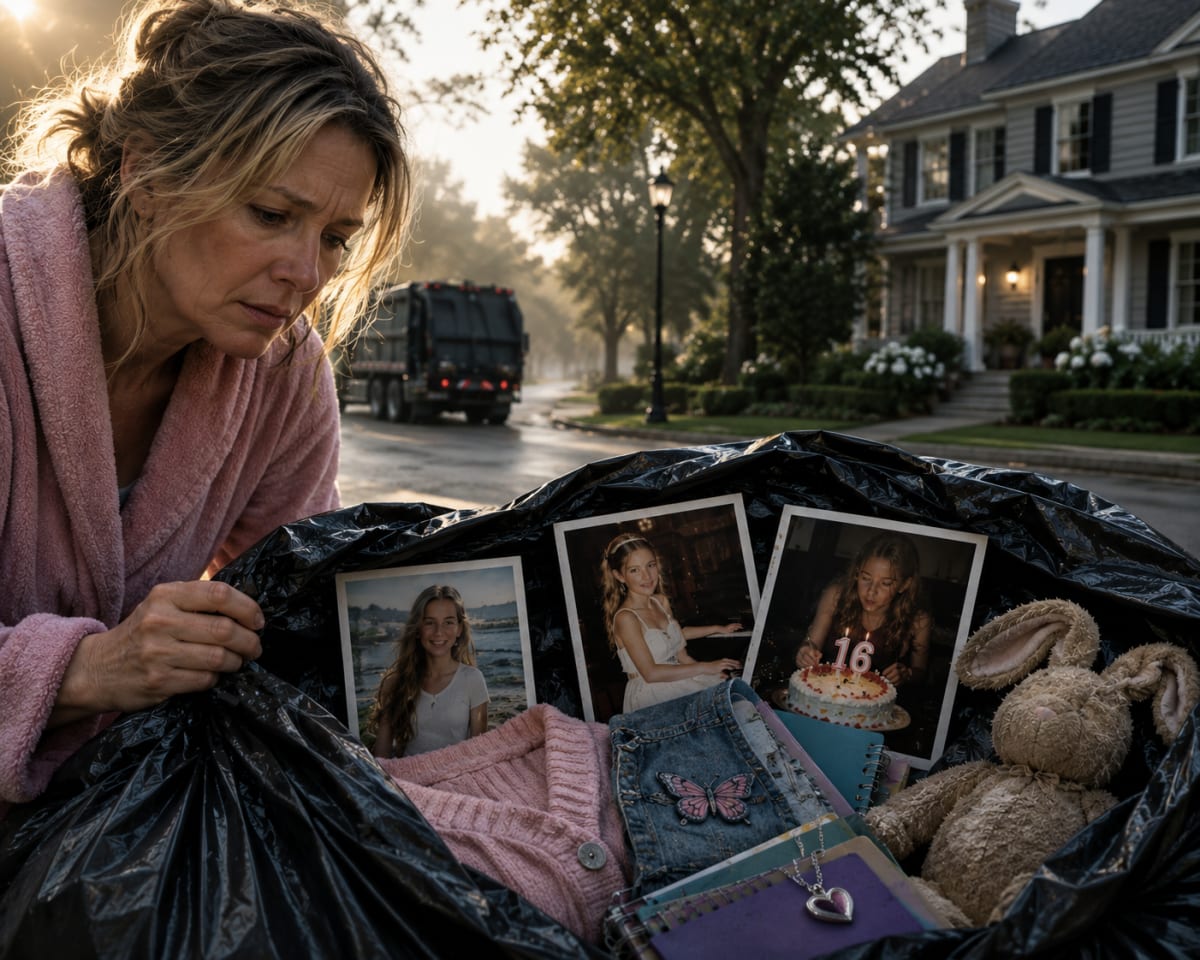
Every morning before sunrise, I noticed my neighbor Barbara dragging a large black trash bag to the curb with extraordinary care, almost as if it contained something precious instead of garbage. Her perfectly maintained home, elegant clothes, and polite smile never changed, yet she seemed weaker every day. My wife Anna was the first to notice the details I ignored—Barbara had lost weight, wore scarves even inside the house, and often paused halfway down her driveway to catch her breath. When curiosity finally got the better of me, I crossed the street while Barbara was away and untied one of the bags. Inside was not trash at all. Carefully folded teenage clothes, school notebooks, old novels, a worn stuffed rabbit, and framed photographs of the same smiling girl filled the bag. Her name, written on the back of one picture, was Emily. Suddenly I imagined terrible possibilities, convincing myself Barbara had been hiding something dark inside that beautiful house.
Later that day an elderly neighbor told us the truth. Emily had been Barbara’s daughter, killed by a drunk driver eleven years earlier after leaving home following an argument with her mother. Since that day Barbara had preserved her daughter’s bedroom exactly as it had been, while her son David blamed her for the tragedy and never truly returned home. Still, I couldn’t understand why she was suddenly getting rid of Emily’s belongings. The answer came two days later when Barbara collapsed beside another trash bag. We rushed to help her and discovered medication covering her kitchen counter and medical appointments filling every square of her calendar. Fighting stage-four ovarian cancer, Barbara quietly admitted she had only weeks left to live. She explained that the labeled bags were donations for teenage girls, while only broken or unusable items were actually being discarded. She wasn’t throwing Emily away—she believed she was protecting David from reliving the pain of entering his sister’s untouched room one last time.
Anna gently challenged that decision. “Did you ever ask David what he wanted?” she asked. Barbara had not. She realized she had been making another impossible choice for someone she loved, just as grief had forced her to do for years. Together we opened Emily’s room for the first time in over a decade. Dust covered the furniture, but the room still held the warmth of the teenager who had once lived there. Instead of emptying everything, we carefully sorted the belongings into four groups: donations, damaged items, keepsakes for Barbara, and memories David deserved to decide about himself. As we worked, Barbara shared stories hidden inside every photograph, medal, dress, and notebook. By the time we finished, Emily’s room no longer looked frozen in tragedy. It looked like the honest story of a young girl whose life had mattered.
When David finally came home, he spent an hour sitting quietly on his sister’s bed before embracing his mother. That evening, years of silence finally gave way to forgiveness. He admitted he had blamed Barbara because anger had been easier than accepting unbearable grief. Barbara confessed she had carried that guilt every single day since Emily died. Over the following weeks, they spent precious time together sharing memories instead of avoiding them. Barbara passed away two months later, but not before healing the relationship she thought had been lost forever. Today, whenever I look across the street at her house, I no longer think about the black trash bags that first made me suspicious. I remember a mother who loved her children deeply, yet spent years believing she had to carry every burden alone. Sometimes the things we think people are throwing away are actually the memories they are desperately trying to protect.