For fifteen years, I raised my daughter Sophie alone after her mother, Catherine, left us. It wasn’t easy – the nights were long, the bills were tight, and there were moments I wasn’t sure I was doing it right. But Sophie and I made it work. We had our routine, our inside jokes, our unspoken understanding. She was my world. Then she turned twenty-five, and everything changed. Sophie came home one evening with news. She had met someone. His name was Marcus. He was kind, she said. He made her laugh. She was in love. I should have been happy for her. Instead, I felt a cold dread settle in my chest.
The problem started small. Marcus seemed controlling – not in dramatic ways, but in the subtle comments he made about how Sophie dressed, how much she worked, who she spent time with. When she announced their engagement, I begged her to reconsider. “He’s too controlling,” I told her. “He’s protective,” she replied, but her voice wavered. I couldn’t stand by and let this happen. I couldn’t watch my daughter marry someone who made her smaller.
When she asked me to walk her down the aisle, I said no. I told her I was sick. I told her I had a work emergency. Really, I just couldn’t face it. The wedding happened on a Saturday in June. I spent the day alone in my study, staring at the wall. That evening, Sophie called. Her voice was cold. “I needed you today, Dad. And you weren’t there.” After that, we barely spoke. Texts became shorter. Calls became rarer. I had lost her.
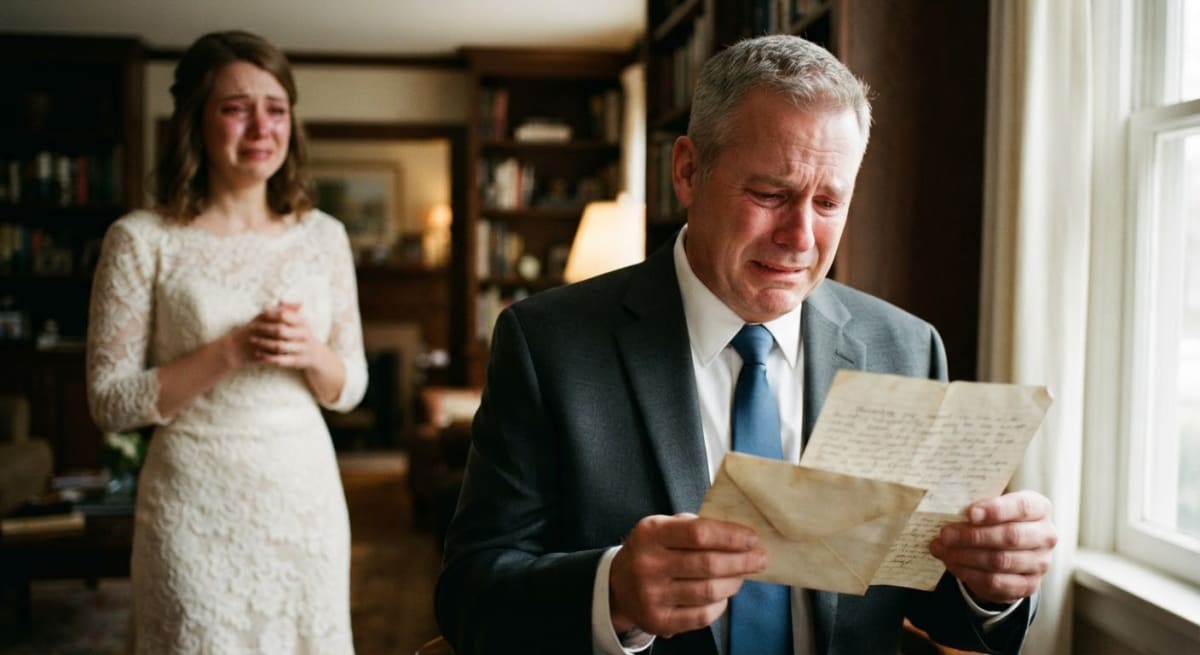
Months passed. I was sitting in my office one afternoon when an envelope arrived. It was old – the paper was yellowed, the edges soft from age. My name was written on it in Catherine’s handwriting. My hands trembled as I opened it. Catherine had left this letter with her solicitor, to be delivered to me only after a significant event occurred in Sophie’s life. The solicitor had judged that Sophie’s wedding qualified.
I read the letter slowly, each word hitting like a stone. Catherine confessed something I never knew. Years ago, before we met, she had been in a relationship with a man who controlled her. Who isolated her from friends. Who made her feel small. She had finally escaped, but the scars never healed. “When I look at you with Sophie,” Catherine wrote, “I see someone who loves her fiercely. But I’m afraid that fierceness might become its own kind of cage. I’m afraid that protecting her too much will teach her that the world is dangerous, that love means possession, that her choices don’t matter because you know better. I’m leaving not because I don’t love you both. I’m leaving because sometimes the greatest gift a parent can give is the freedom to make their own mistakes.”
The letter continued: “If you’re reading this, it’s because something important has happened in Sophie’s life. She may have chosen someone you don’t approve of. She may be making a decision you fear. But please, my love – let her. Trust her. Even when it terrifies you.” I sat there in the dark, the letter in my hands, tears streaming down my face. Sophie had married Marcus. And I had abandoned her, just when she needed me most – not to protect her from him, but to believe in her ability to navigate her own life. I called her that night. “Sophie, I need to see you. There’s something I need to tell you – and something you need to know about your mother.” What I discovered changed everything.