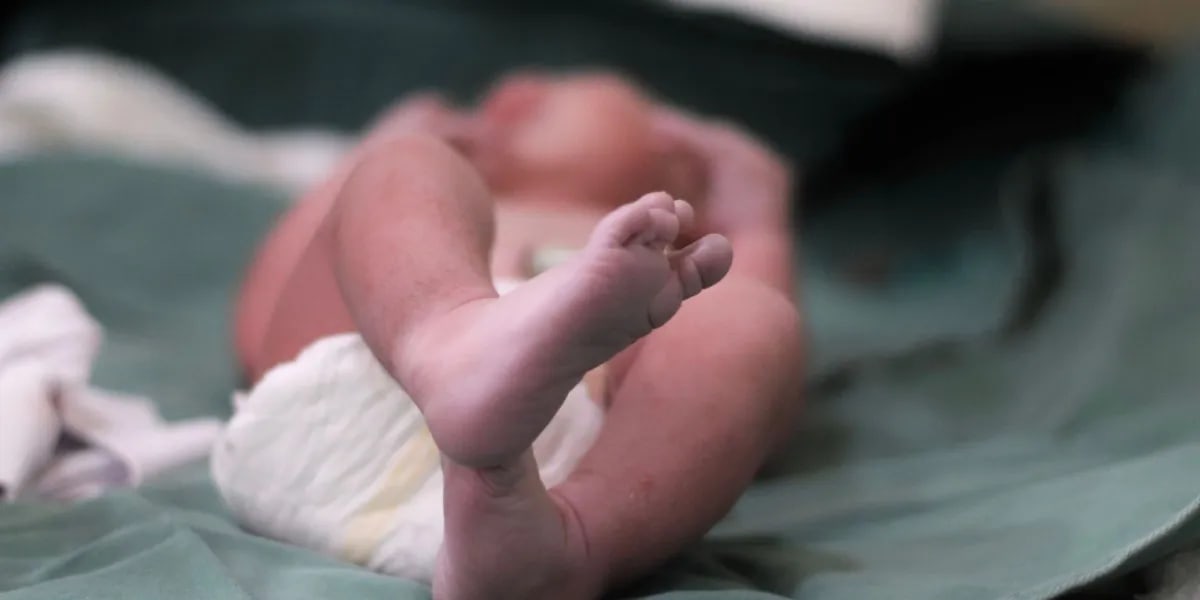
When my daughter was born, the delivery room filled with delighted laughter.
"Oh my goodness! Look at all that hair!" the doctor exclaimed.
My baby girl, Charlotte, weighed seven pounds and had the tiniest nose, chubby cheeks, and a thick head of dark hair that reached her shoulders when wet.
One nurse joked, "She's ready for her first haircut!"
Another gently gathered a few strands into a tiny ponytail with a soft hair tie.
My husband, Mason, couldn't stop taking pictures.
But when his mother, Margaret, arrived, everything changed.
She took one look at Charlotte and went pale.
"That hair needs to come off. Today."
I laughed, thinking she was joking.
She wasn't.
"In our family, a baby born with unusually long hair must have it cut before she sees her reflection. Otherwise, she'll carry the sorrow of the woman who came before her."
"Margaret, that's ridiculous."
She grabbed Mason's arm.
"Tell her what happened to your sister."
Mason immediately looked away.
I'd been married to him for six years. He'd never mentioned having a sister.
"Mason?"
"Mom, stop."
Margaret leaned closer.
"Promise me you'll cut it before you take her home."
I refused.
Two days later, we brought Charlotte home.
But the moment I entered our bedroom, I noticed something strange.
The mirror above our dresser was gone.
So was the one in the hallway.
Even the bathroom mirror had been removed.
"Mason, where are all our mirrors?"
He wouldn't meet my eyes.
"Mom asked me to put them away for a few days."
I stared at him.
"You actually believe her?"
"No. I just don't want her upsetting you."
That evening, while Mason was downstairs, I heard him talking on the phone.
"She hasn't seen it yet," he whispered.
A pause.
"Mom, I know what you said happened last time."
My blood ran cold.
I stepped into the hallway with my sleeping baby in my arms.
"Mason?"
He turned around. For several seconds, neither of us spoke.
Then I heard Margaret's voice through his phone.
"Mason, did you check the back of the baby's head?"
I instinctively parted Charlotte's thick hair to look underneath.
Mason rushed toward me.
"Wait!"
But it was too late.
There, hidden beneath the dark strands, was a perfect birthmark shaped like a crescent moon.
My stomach dropped.
"What is this, Mason?"
He took the phone away from his ear.
"Mom, I'm calling you back."
"Sit down. Please."
We went into the living room. Charlotte remained asleep against my chest as Mason finally told me everything.
He had a sister. Her name was Rebecca.
She was born with the same thick, shoulder-length hair as Charlotte.
She also had the crescent moon birthmark on the back of her head.
"My parents were terrified of that birthmark," Mason said quietly.
"Why? It's beautiful."
"Because Rebecca's grandmother—my great-grandmother—had the same mark. And so did her mother before that. And their mother before them."
He paused, running his hand through his hair.
"It goes back generations in my mother's family line."
"That's not unusual. Birthmarks run in families."
"That's not the whole story."
Mason looked at me with red-rimmed eyes.
"Every woman in that line—my great-great-grandmother, her daughter, her daughter, Rebecca—they all struggled with severe depression. Some battled addiction. One tried to hurt herself."
I felt my grip tighten on Charlotte.
"Mason..."
"My parents thought the hair was connected to it somehow. Some old superstition about women born with that mark being destined for sadness. So they cut Rebecca's hair immediately. Got rid of every inch before she could see her reflection."
"And did it help her?"
"No," he whispered.
"Rebecca struggled anyway. It just traumatized her instead. She spent years in therapy because she felt like her parents were ashamed of her from birth."
I looked down at our daughter's beautiful dark hair.
"So your mother wanted me to cut Charlotte's hair to prevent... what? Sadness?"
"I know it sounds insane when you say it out loud."
"It does sound insane, Mason. Because it is insane."
He nodded miserably.
"I've known that for years. But she's my mom, and when she gets an idea in her head, she won't let it go."
Over the next few days, I did my own research.
I called a therapist who specialized in family trauma and found out about generational anxiety—how fear and worry could be passed down through families, creating self-fulfilling prophecies.
The women in Mason's family line probably weren't depressed because of their birthmarks or their hair.
They were depressed because they'd been raised to believe something was wrong with them.
That belief became their reality.
I called Margaret and invited her over.
She arrived looking hopeful, like maybe I'd finally come to my senses about the hair.
We sat at my kitchen table, and I didn't waste any time.
"I want to tell you about Rebecca."
Her face went rigid.
"Mason told me everything. About the haircut. About how traumatized she was."
"He had no right—"
"He had every right. Because you're trying to do the same thing to Charlotte."
Margaret's hands shook as she wrapped them around her coffee mug.
"You don't understand what it's like to watch your child suffer."
"No, I don't. But I do understand that cutting off a baby's hair won't prevent suffering. If anything, it causes it."
"The mark—"
"Is just a birthmark. It's not a curse. It's not a warning. It's just part of who she is."
Margaret looked away.
"My mother did the same thing to me," she finally said.
Her voice was so small.
I had not expected that.
"What do you mean?"
"I had the mark too. And the hair. My mother was terrified of it. She cut my hair so short I looked like a boy. She told me I was broken, that I had to hide myself."
She touched her own graying hair.
"I spent my entire life believing something was fundamentally wrong with me. When I had Rebecca, I thought maybe if I did it differently—cut the hair quickly, before she could internalize the shame—it would protect her from that pain."
"But it didn't," I said gently.
"No. It just passed the shame along in a different form."
Margaret finally looked at me.
"I'm so tired of being afraid."
We sat in silence for a long moment.
"Charlotte's hair stays," I said firmly.
"And if you try to pressure Mason about this again, you won't be welcome in our home."
She didn't argue.
Over the following months, something shifted in Margaret.
She started therapy to work through her own childhood trauma.
She apologized to Rebecca, who cautiously began rebuilding her relationship with her mother.
And she met Charlotte—not with fear, but with genuine joy.
One day, Margaret was babysitting, and I came home to find her sitting on the floor, braiding Charlotte's hair.
"Look at these braids, Grandma!" Charlotte squealed.
"They're the most beautiful braids in the whole world," Margaret said, and there were tears in her eyes.
Charlotte is three years old now, and she still has her thick, beautiful hair.
The crescent moon birthmark on the back of her head is barely visible beneath those dark strands.
I've caught her looking at herself in mirrors plenty of times—admiring her braids, making funny faces, laughing at her reflection.
She looks happy.
She looks free.
And that, I think, is what every generation deserves to pass down instead.