Eleanor had looked James in the eye and told him he wouldn't get a penny when she died. He'd accepted that without hesitation. But weeks after her funeral, her lawyer insisted Eleanor had arranged something for him before her death. Whatever it was, James had to collect it quickly.
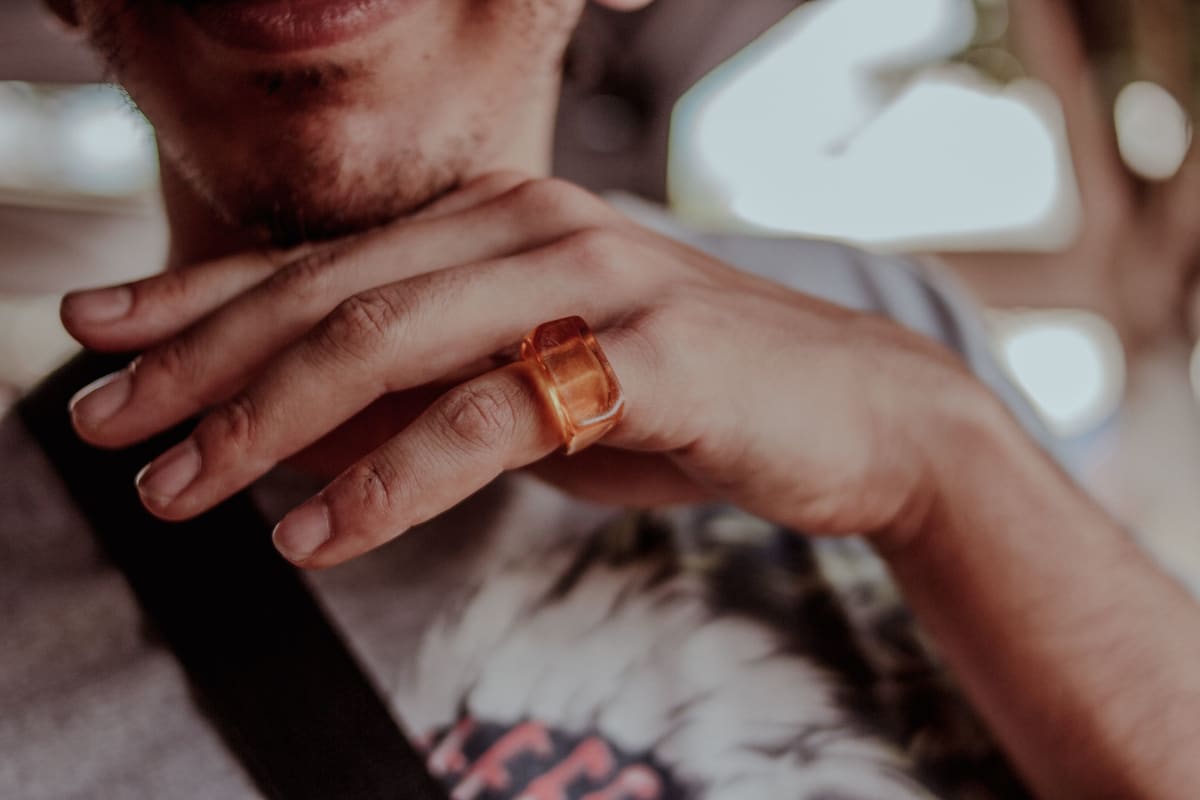
I'm 22. I proposed to a 69-year-old woman with a gummy ring because I couldn't afford a real one.
Before she was even buried, her children were telling everyone I'd only wanted her money.
The worst part?
I understood why people believed them.
Eleanor was my patient.
I was a student care assistant at the facility where she'd spent the last fourteen months of her life.
I had eleven dollars in my account when I proposed.
But Eleanor had made one thing clear.
"You're not getting a cent from me, James. Not one."
I'd told her I didn't care.
And I meant it.
So when her lawyer called after the funeral, I knew something was wrong.
"Eleanor arranged something for you before she died," he said. "It's not in her will. She asked me to explain it in person, and there's a deadline approaching."
I agreed to come the next morning.
That night, I kept remembering how everything started.
Eleanor was sitting beside her window, holding a book she couldn't read because she'd misplaced her glasses.
"I could read to you," I'd offered.
She looked suspicious.
"Don't use that awful cheerful voice people use with old ladies."
I laughed.
That became our routine.
I read during my breaks, and we argued about the characters.
She remembered everything I told her.
My exams.
My worries.
Even something I'd mentioned three weeks earlier.
Mom loved me, but she'd spent years worrying about bills and keeping our family together.
I'd learned not to add my problems to hers.
With Eleanor, I didn't have to pretend everything was fine.
Her children visited twice in fourteen months.
Both times, they brought paperwork.
After one visit, she told me, "The worst thing about getting old is that people start talking about you as though you're already gone."
In March, I confessed my feelings.
She laughed until she realized I was serious.
"James, I'm dying, and I'm old. You know that, right?"
"I know."
"And you're 22."
"I know that too."
In April, I proposed with a gummy candy shaped like a ring.
She laughed, slipped it onto her finger, and then grew serious.
"Look, if you're doing this for the money..."
"How can you even think that?"
"Because everyone else will."
"I don't want your money."
She studied me.
"You're not getting a cent from me."
"That's fine."
"I know," she whispered. "That's why."
I was reassigned from her care when I disclosed my feelings, but I kept visiting her outside my placement hours.
She died in September.
We never married.
In fact, she never reciprocated my feelings.
Her children accused me of manipulating her anyway.
And now, her lawyer was telling me she'd left me something.
The next morning, I sat across from a man named Daniel.
"Eleanor arranged a gift before she died," he explained.
"What kind of gift?"
"Her book collection."
I stared.
"Her books?"
"Nine boxes. She signed the transfer documents herself, without your involvement, and had them placed in storage under your name."
He handed me an appraisal.
The collection was worth nearly $38,000.
I read the figure twice.
"She promised I wasn't getting any money."
"She didn't leave you money from her estate. But these books have considerable value."
Somehow, she'd kept the literal promise while giving me something worth more than I earned in a year.
"Her children will say I talked her into it."
"They may challenge the gift. I can't guarantee there won't be difficulties."
I pushed the paperwork away.
"Then I don't want it."
Daniel opened his drawer.
"Eleanor anticipated that."
He handed me an envelope with my name across it.
I recognized her handwriting immediately.
"Dear James, Before you refuse the books, there's something I should have told you while I was alive."
"I knew your grandmother."
I stopped reading.
My grandmother, Margaret, was 73 and lived 20 minutes from my apartment.
She'd never mentioned Eleanor.
I continued.
"Margaret and I were practically sisters. We grew up together, shared everything, and promised nothing would separate us."
"Then we married, and I made a terrible mistake."
Eleanor explained that she'd recognized my surname when we met.
It was the name my Grandma Margaret had taken when she married.
At first, she'd assumed it was coincidence.
But after we'd become friends, she searched old newspaper announcements.
She found my father's name in a family notice and recognized it from something I'd told her.
She discovered I was her former best friend's grandson.
"By then," she wrote, "you had already become very dear to me. I was afraid telling you would change everything."
I stared at the letter.
Eleanor had known for months.
Every time I'd mentioned Grandma, she'd known exactly who I meant.
And she'd never said a word.
Daniel showed me the collection in a storage room.
Nine boxes, carefully labeled.
Inside one was a photograph.
Two teenage girls sat beneath a tree, sharing a book.
One was Eleanor.
The other had my grandmother's eyes.
On the back was written, "Margaret and Ellie. Summer, 1972. Sisters forever."
I turned it over several times.
What could have happened between them that neither had mentioned the other for decades?
Daniel explained that the prepaid storage period ended Friday.
I promised to return with a van.
Then I went home and continued Eleanor's letter.
The next paragraph changed everything.
"James, there is something worse than my keeping our connection secret. Years ago, your family needed help. I knew. And I did nothing."
I read it again.
I was nine when Dad lost his job.
I remembered Mom crying in the kitchen.
Grandma arriving with groceries and pretending she'd bought too much.
I remembered losing our house.
Eleanor explained that an old acquaintance had told her Margaret's family was struggling.
Years earlier, she'd promised Grandma that if either family ever needed help, the other would be there.
"I could have called," she wrote. "I could have written."
"But I was ashamed of what I'd done to Margaret, and terrified she'd reject me. So I convinced myself staying away was kinder."
"It wasn't kindness, James. It was cowardice."
I put the letter down.
The woman who'd made me feel valued had once turned her back on my family.
I wasn't angry about the money.
I was angry because she'd known.
Had she been kind to me because she felt guilty?
Had I reminded her of my grandmother?
For the first time, I wondered whether I'd misunderstood our entire relationship.
I needed answers.
So I called Grandma.
"Did you know someone named Eleanor?" I asked.
Silence.
"Which Eleanor?"
I told her.
Something clattered.
"Grandma?"
"I'm here."
"She died last month."
Another silence.
Then, quietly, "Oh, Ellie."
I'd never heard her sound like that.
I explained that Eleanor was once under my care.
I couldn't tell her about my feelings.
I visited the following morning.
Grandma took one look at the photograph and started crying.
"We were inseparable," she said. "She used to climb through my bedroom window carrying books."
"What happened?"
She looked down.
"Your grandfather and I had a difficult marriage in the beginning. I was young and frightened. I told Eleanor I was thinking about leaving him."
"And?"
"She told him."
I stared.
"Why?"
"She thought she was helping. She told him I needed reassurance, that he should convince me to stay."
Grandma shook her head.
"He came home furious. Accused me of telling everyone our private business. For weeks, every argument became another fight about what I'd told Eleanor."
"Did you leave him?"
"No. We eventually worked through our problems. But I couldn't trust Eleanor anymore."
"Did she apologize?"
"She tried. I told her never to contact me again."
"And she didn't?"
"No."
"She believed you hated her."
Grandma sighed.
"For years, I did."
"Do you still?"
She looked surprised.
"Of course not."
"Then why didn't you tell her?"