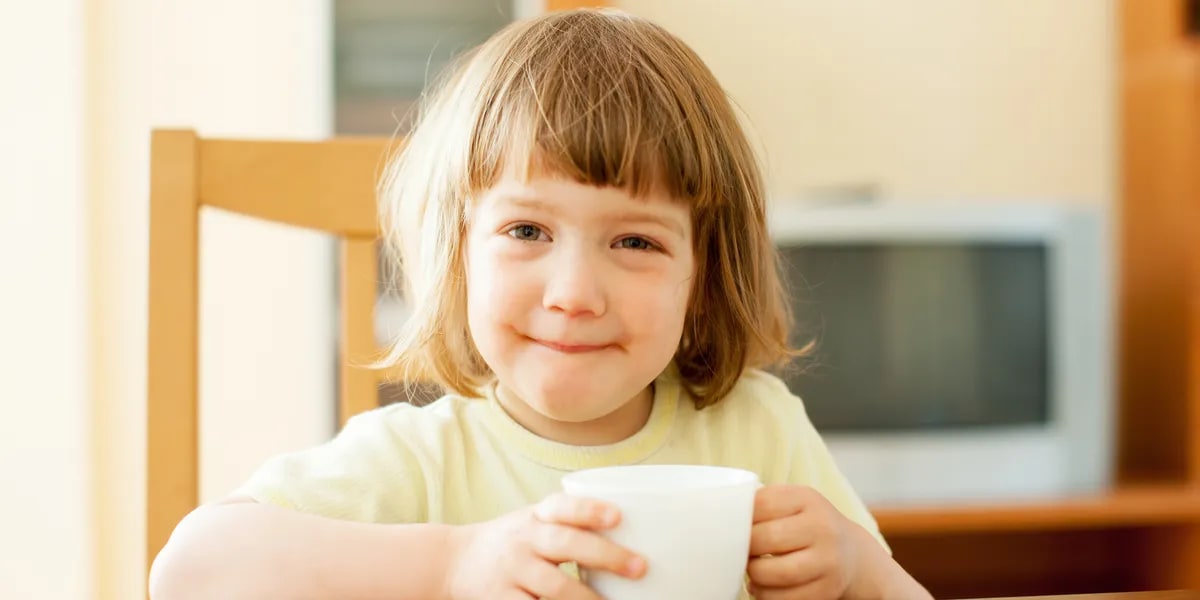
I volunteer at a small local church, and we often organize events for children in foster care.
We bring diapers, toys, books, and some clothes for the kids.
I've been doing this for many years, ever since my husband and daughter died in a car accident.
I nearly lost my mind from grief and had no idea how to keep living.
That's when I came to the church and started volunteering.
The work gave me purpose again, or at least the illusion of it.
But I was still going through the motions most days.
Then one day, when we brought toys to a children's group home, I met her.
A little girl named Lily was sitting completely alone while all the other children were playing.
She had her back to everyone, just sitting there on the carpet.
One of the caseworkers told me that Lily was only 3 years old, but she had already been in foster care for quite a while, and five families in a row had considered adopting her but backed out.
I couldn't understand how anyone could meet such an amazing little girl and simply walk away.
"Why would they refuse her?" I asked the caseworker.
"They didn't give detailed reasons," she said quietly. "They just said it wasn't going to work out."
I got down on my knees so I was at Lily's level.
She turned and looked at me with these huge brown eyes.
Then I looked at her, and something inside me just clicked.
I felt it in my chest, like my heart was speaking to me directly.
It was the same feeling I'd had when I first held my own daughter.
I immediately said to the caseworker:
"Please tell me what I need to do. I'd like to adopt her."
Everyone looked at me like I was crazy.
I was 68 years old, lived alone, and hadn't even held a small child in my arms in years.
The caseworker's eyebrows shot up.
"Mrs. Wilson, I think you should take some time to think about this. This is a major decision."
"I've already thought about it," I said. "I want to adopt her."
Lily reached out and grabbed my finger.
That was all the confirmation I needed.
But I was simply following my heart, and I'd learned long ago that my heart didn't lie to me.
After long months of paperwork, interviews, and home visits, I finally adopted Lily and brought her home.
The social workers kept warning me about attachment issues and behavioral challenges.
They said every child was different, that I should be patient and realistic.
I nodded and listened, but deep down, I knew they were wrong.
For the first time in many years, my house felt alive again.
Lily laughed a lot, and she made me smile too.
Toys were scattered all over the house, and sometimes she even reminded me of my late daughter.
She would dance around the kitchen while I cooked.
She would climb into my lap while we watched cartoons together.
God, I loved her like my own from the very first moment.
It felt like she needed me just as much as I needed her.
My heart hadn't misled me.
We fell into a routine that felt natural and easy.
Morning cartoons, breakfast, playtime, walks in the park.
In the evenings, I'd read to her before bed, and she'd snuggle against my shoulder.
For the first time since my family died, I had a reason to wake up in the morning.
Six months passed, and Lily had settled in beautifully.
She was thriving in preschool.
The teacher said she was bright, curious, and well-adjusted.
When I picked her up each afternoon, she'd run to me and throw her arms around my neck.
"Mommy!" she'd cry out.
I never got tired of hearing that word.
But a few months later, I got a call from the lawyer who had handled Lily's adoption.
His name was David, and he'd always been professional and straightforward with me.
But this time, his voice was trembling.
"Mrs. Wilson, some additional documents have just been found in Lily's case files. I don't even know where to begin... Could you come to my office as soon as possible?"
My stomach tightened.
"What kind of documents?"
"I'd rather discuss this in person," he said. "It's important."
I grabbed my car keys and rushed to his office downtown.
It was a gray afternoon, and I could feel my anxiety building as I drove.
What could be so serious?
Was there a legal issue with the adoption?
I walked into the office and sat down across from him, having no idea what was coming.
He looked unusually serious, like he'd been dreading this conversation.
"These documents concern the five families who previously backed out of adopting Lily," he began slowly. "They weren't included in the records we originally received. I'm so sorry..."
My heart started pounding.
"What do you mean they weren't included? They were supposed to give me all the information."
"I know, and I apologize. The case files were transferred between offices, and apparently some documents got lost. They've just now resurfaced."
He opened a manila folder on his desk.
Inside were several typed pages and what looked like medical reports.
"I think you need to know why those families actually refused to adopt her," David said quietly.
My mouth went dry.
"Tell me."
He looked at me for a long moment.
"Before we go through this, I want you to know that none of this changes what you and Lily have. You understand that, right?"
"Just tell me," I said.
I looked at the first page.
It was a statement from the first family, the Hendersons.
"Behavioral concerns noted," it read. "Child displays aggressive tendencies during transitions. Inappropriate touching of other children observed."
I kept reading.
The second family, the Mitchells, had written something similar.
"Lies frequently. Extreme emotional dysregulation. Bites when frustrated."
Then, on the third page, my eyes stopped on something.
There was a medical report dated eighteen months before I adopted Lily.
The diagnosis was printed clearly in black ink: Fetal Alcohol Spectrum Disorder.
My hands began to shake, and I cried out:
"Oh my God... how could they hide this from me?! I can't believe what I'm seeing! This is impossible!"
David reached across the desk toward me.
"Mrs. Wilson, please—"
"No, no, no," I said, standing up from my chair. "You told me all her medical records were included. You promised me you had everything."
"We thought we did," David said, his voice breaking. "These reports were misfiled in a different section of the archives. Someone found them while reorganizing. I am genuinely sorry."
I sank back into the chair.
FASD meant developmental delays, behavioral issues, learning problems.
It meant a lifetime of challenges.
And they'd all chosen not to tell me.
"How could the social workers not mention this?" I asked. "How could they let me adopt her without telling me?"
"That's what I'm trying to figure out," David said. "I've already called the agency. It appears there was a bureaucratic failure. The documents weren't properly transferred to your file during the adoption process."
I looked at the folder again.
There were pages of behavioral notes, psychiatric evaluations, doctor's recommendations.
All of it detailed, all of it concerning, all of it hidden from me.
"Did the other families know?" I asked.
"According to these notes, yes. It's clearly documented that they were all informed of the diagnosis before they chose not to proceed."
I felt my chest tightening.
So Lily's condition hadn't been some secret kept from everyone.
The five families before me had known exactly what they were dealing with.
And they had walked away.
I read through the rest of the documents in silence.
The psychiatric evaluation concluded that Lily would likely need ongoing therapy, possibly medication management, and specialized educational support.
There was a note from her foster mother mentioning that Lily had set a small fire in the house.
There was another note about Lily stealing food and hiding it in her room.
There was a report of Lily hitting another child so hard that she'd left a mark.
My mind was reeling.
All this time, I'd been managing just fine.
Lily had been good at school.
She wasn't aggressive with me.
She wasn't acting out.
"Is she..." I started, then stopped. "Is she showing any of these behaviors now?"
"I don't know," David said. "But Mrs. Wilson, I need you to understand something. The FASD diagnosis is real. It's not going to go away. But the way it presents can vary enormously from child to child."
"So it's possible she won't develop these issues?"
"It's possible. Or they might emerge later as she gets older and faces more complex demands. Or they might already be there and just not visible yet."
I felt like I was falling.
"What do I do?" I whispered.
"First, I would recommend taking her to a developmental pediatrician. Someone who specializes in FASD. They can do a comprehensive evaluation and tell you what to expect."
"And if she does have serious behavioral issues? What then?"
David was quiet for a moment.
"Then you'll need to be prepared to get her the support she needs. Therapy, potentially medication, special education planning."
"The agency should have told me this from the day I asked about adopting her," I said bitterly.
"You're right. They should have. I'm going to file a formal complaint and find out exactly what happened. You may have grounds for legal action if you want to pursue it."
"I don't want legal action," I said. "I want answers."
I drove home in a daze.
My hands gripped the steering wheel so tightly that my knuckles turned white.
Lily was at preschool still, so I had two hours before I needed to pick her up.
I sat at the kitchen table and re-read all the documents David had given me.
The more I read, the more I realized how much I didn't know.
How much had been deliberately withheld.
How five families had looked at this little girl and decided she was too much work.
Too much risk.
Too complicated.
And I had swooped in, believing I was being noble and selfless.
But had I? Had I really?
Or had I just been so desperate to fill the void in my life that I hadn't asked enough questions?
I picked Lily up from preschool at 3 PM.
She ran to me as always, threw her arms around my neck.
"Mommy! We painted pictures today! Can we get ice cream?"
I held her close and breathed in the smell of her hair.
"Sure, baby. We can get ice cream."
We sat at a bench outside the ice cream shop, and Lily licked her cone while swinging her legs.
"Mommy, why are you sad?" she asked, looking up at me.
"I'm not sad, sweetheart. I'm just thinking about something."
"What?"
I looked at this beautiful little girl, who'd been rejected five times before I came along.
"I'm thinking about how lucky I am to have you," I said.
And I meant it.
That night, after Lily was asleep, I called David back.
"I need you to get me a referral to a pediatrician who specializes in FASD," I said. "And I want copies of all her medical records, everything. I don't want any more surprises."
"I'll get those to you tomorrow," David said. "Mrs. Wilson, I want to say something. I've reviewed what happened, and it was wrong. The agency was negligent. But I also want you to know that you did something remarkable."
"Adopted a child with a serious condition without being told?" I said flatly.
"No. You adopted a child that five other families gave up on. You looked at Lily and saw something worth fighting for. That matters."
I wasn't sure how to respond to that.
I didn't feel noble.
I felt blindsided and angry and scared.
Two weeks later, we had an appointment with Dr. Patricia Chen, a developmental pediatrician who specialized in FASD.
She spent three hours with Lily and me.
She watched how Lily played.
She asked me detailed questions about her development, her behaviors, her eating and sleeping habits.
She did cognitive testing with blocks and pictures and puzzles.
Lily was patient and cooperative the whole time.
"So what do you think?" I asked finally, holding my breath.
Dr. Chen set down her clipboard and looked at me seriously.
"Lily does have fetal alcohol spectrum disorder. That's confirmed by her medical history and what I'm seeing today. But I want to be very clear about something."
"Okay."
"She's a mild to moderate case, not severe. Her cognitive function is close to age-appropriate, maybe slightly delayed in some areas. Her social skills are actually quite good. I see no signs of the behavioral issues that were documented in her earlier file."
"What does that mean?" I asked.
"It means that some children with FASD respond beautifully to a stable, nurturing environment. They heal. They thrive. Lily appears to be one of those children."
My eyes filled with tears.
"Is it possible she'll never have these behavioral problems?"
"It's possible. The prefrontal cortex continues developing until the mid-twenties. She could develop impulse control issues or behavioral challenges down the line. But right now? Right now she looks like a kid who's doing really well."
"So those five families..." I trailed off.
"Probably made their decisions based on fear of the unknown," Dr. Chen said gently. "FASD can be a serious diagnosis. Without proper support, children with FASD do sometimes struggle significantly. But with the right family environment, the right support, the right love? Many of them do wonderfully."
"I didn't have the information," I said. "No one told me she had this diagnosis."
"I'm aware. And that was wrong. But here's what matters now: you know. And you're here. And from what I can see, Lily is flourishing."
She recommended ongoing monitoring, yearly check-ups, and making sure Lily had good support in school.
But she didn't recommend medication or intensive therapy.
"Just keep doing what you're doing," Dr. Chen said as we left. "She's got what she needs."
Over the following weeks, I processed what I'd learned.
I was angry at the adoption agency for their negligence.
I was frustrated that I hadn't known earlier.
But I also realized something important.
The five families who'd walked away had made their choice based on fear.
They'd looked at a diagnosis and decided it was too risky.
They'd looked at behavioral reports and decided a child was too damaged.
But children aren't their worst moments.
Children aren't their diagnoses.
Lily had been rejected five times because of paperwork and fear and decisions made by people who didn't know her.
And then I'd arrived, not because I was special or heroic, but because I wasn't looking for a perfect child.
I was looking for a reason to live again.
Lily gave me that reason.
And it turned out that was exactly what Lily needed too.
One evening, about a month after I got the diagnosis, Lily and I were playing in the backyard.
She was chasing butterflies, laughing that pure, unselfconscious laugh that children have.
I sat on the porch and watched her.
"Mommy, look! I caught one!" she called out.
She held out her cupped hands, and I could see a butterfly fluttering between her palms.
"Don't squeeze it, baby. Just look."
"It's so pretty," she whispered.
Then she opened her hands and let the butterfly fly away.
"Bye, butterfly," she called after it.
She turned and ran back to me, jumped into my lap.
"I love you, Mommy," she said, putting her small arms around my neck.
"I love you too, sweetheart. So much."
And I meant it with every cell in my body.
Not in spite of her diagnosis.
Not because of some noble purpose.
But because she was my daughter, and I was her mother.
That was the only truth that mattered.
Sometimes the things we don't know turn out to be exactly the things we needed not to know.
Because if I'd walked into that adoption agency with the knowledge of Lily's FASD, I probably wouldn't have pursued it.
I would have been afraid, just like the five families before me.
I would have talked myself out of it, convinced myself it was too much.
And Lily would have spent who knows how long waiting for someone brave enough to say yes.
Instead, I said yes from my heart, before my head could talk me out of it.
And it was the best decision I ever made.
We're five years in now.
Lily is eight years old, thriving in a gifted program at school, still showing no serious behavioral problems.
She has her challenges like any child, but they're manageable, normal.
Dr. Chen says she continues to do wonderfully and that early intervention and early love made all the difference.
I don't know if I was brave or foolish when I decided to adopt Lily that day at the group home.
I don't know if what happened was fate or luck or just the right time meeting the right people.
But I know this: Lily saved me just as much as I saved her.
And sometimes, that's all that matters.